

Theconceptof AIinmusic has become synonymous with slop:fake music made by fake bands, a bitlike theelevator“muzak”of the 1960sonly worse.But the application of AI technology doesn’t have to meansynthetic soundsorcomputerisedrecreations of classic artists. Indeed,whenAItechnologyhas beenapplied tothe Beatles in particular, ithas sharpenedour understanding and appreciation of the group – not so much because of theeffect on the music, but through the wayitwasused onPeter Jackson’sGet Backand thenew, cleaned-up version of theAnthologyTV series.Suddenly, we can hear the Beatles talkto each otherwith astonishing clarityturning the viewer themselvesinto the fifth Beatle – a fly-on-the-wall if youwill excuse the insect-related pun.That tech isnow being used to re-mix– or even de-mix –the music, with theimpending reissue ofRubber Soulthe latest to benefit.
“God bless AI, and it’s good and bad,” says Giles Martin, who is the producer of the Beatles’ current catalogue, following the work done in the 1960s by his father George Martin. “You can actually dig in. So, for instance, forAnthology,I went to Shea Stadium or the Washington concert, and I can now, using machine learning, isolate John’s voice or isolate the drums and bring the drums out.On [the original footage of] the Washington concert, you can’t hear the drums at all. Now you can hear the drums. But I’m not adding anything to it. I’m not recreating anything. It’s like finding something underground. It’s like detectorists for audio people.”
The technologyreferred toby Martin is calledMAL, which stands for Machine-Assisted-Learning,but is reallya nod to Mal Evans, the Beatlesfaithfulroadieand HAL, the computer from2000AD.MALwas developed by the sound specialistteamat Peter Jackson’sWingNutFilms led by Emile de la Rey, andwasinitially used to correct the terrible sound from the originaltapes of theLet It Bedocumentary, the source material forGet Back.
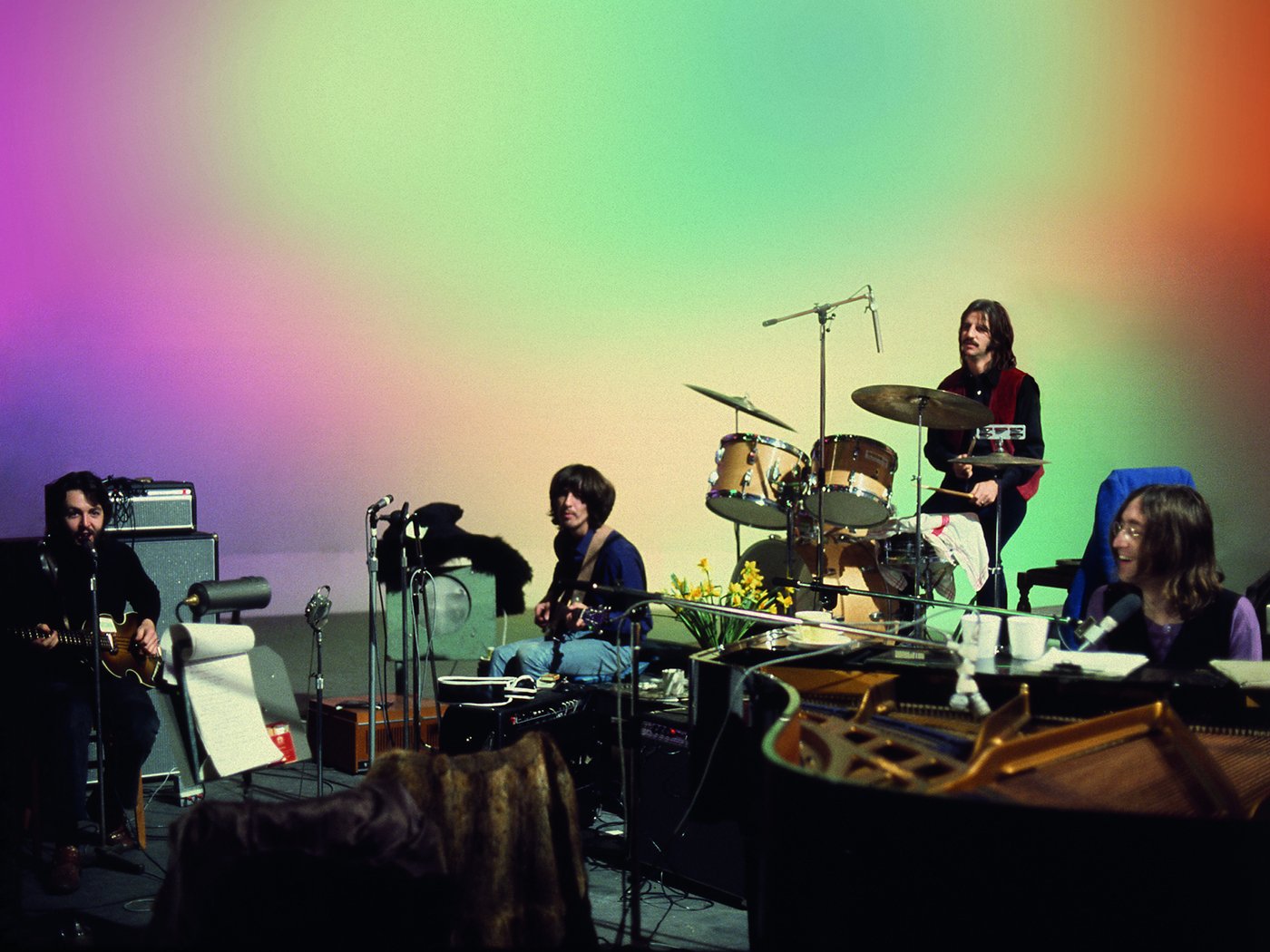
Let ItBewas conceivedand shotin 1969asapiece ofunstructuredcinemavérité. This meantthere were multiple people in the room having overlapping conversations, while musical instruments wereconstantlybeing twanged and thumped. MALallowed Jackson toidentify andisolatethese noises on toseparate tracks,unearthingpreviouslyburiedmoments such asPaul in the background merrily composing “Let It Be”on pianowhile the camera focuses on a conversation going on in the foreground.At another point, we see Paul McCartney and Mal Evans chatting away at the piano while Paul is writing “The Long And Winding Road”– both conversation and music as clear as crystal.We can even eavesdrop on aprivate conversationin the canteenbetween Lennon and McCartney about Harrison – originally recorded via a microphone concealed in a flowerpotbutimpossible tohearbecause of the clatter of utensils and background noise.
Time and time again, MAL allowedJackson to deconstruct, isolate and reconstruct audio, placing the viewer in the room withthe Beatles,able to clearlyheareverything at the same time– something that is technically impossible but extremelyusefulwhen it comes to film.Thatartificialseparation of speech and musicultimately madethe four Beatles seem morerealas we see them argue, laugh, create and just chew the fat.MAL wasevenusedwhenthe originalLet It Befilmwas reissued in2024,a real full circle moment givenGet Backwas made fromthe samerawmaterial.
“To me the sound restoration is the most exciting thing,” director Peter Jackson saidofGet Back.“We developed a machine learning system that we taught what a guitar sounds like, what a bass sounds like, what a voice sounds like. In fact we taught the computer what John sounds like and what Paul sounds like. So we can take these mono tracks and split up all the instruments wecan just hear the vocals, the guitars. You see Ringo thumping the drums in thebackgroundbut you don’t hear the drums at all.”
When Giles Martin saw what Jackson had done withGetBackhe realised the same technology could be applied to the music, starting withthe reissue ofRevolverin 2022. MALwasnextused to “de-mix”John Lennon’s original recording of “Now And Then”, allowing Ringo and Paul to write a “new” Beatles song in 2023.Paul McCartney caused some alarm when he said the new song was being created with AI, as many people immediately thought it meant John Lennon’s vocals were being generated by computer.
That’s why in conversation withUncut,GilesMartin was quick to explainwhatMAL actually entails, politely putting out a fire that McCartney had inadvertently started.“It’s not AI in the sense that there’s no computer singing John’s part,” hesaid. “It’s just extracting John’s voice from the tape and separating it from the piano. Nothing is added or taken away. When we were doing this, the most important thing was ensuring John Lennon sounded like John Lennon. It was really important that people recognised the voice. They had tried to do thison “Now And Then”when they did “Free As Bird” and “Real Love” butthey couldn’t get John’s voice clean. When they removed the background noise, it didn’t sound like John.In those days, they didn’t have the technology.”
Indeed, the technology was moving so fast thatMartin says he would not have been able to de-mix “Now And Then” even a year before.“It’slike openinga Pharoah’s tomb and finding the untouched gold,”Martin said.Every tomb raider knows the risks ofgetting greedy and evoking a mummy’s curse, soMartinuses the tech as sparingly as possible,even ifMALmeansthe Beatlescancontinue to surprisemore than 50 years after their demise. “That’s the weird thing,” says Martin.“When I can isolate with the voice, I’m thinking, ‘I can hear John now and I can see him on screen singing,’ and there’s his voice coming out on his own. I’m thinking, ‘He’s never even heard this and he was there!’”