

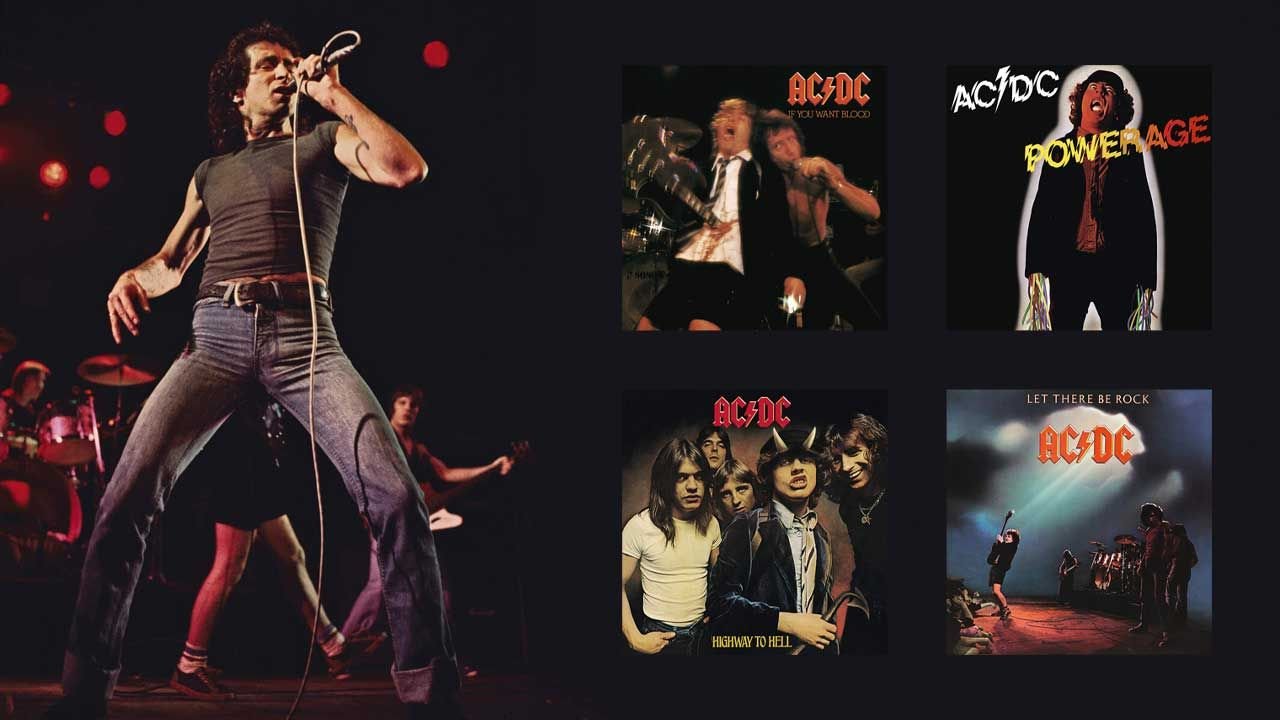
Before Bob Defrin helped create some of the most iconic images in rock history, he first had to figure out what AC/DC looked like. And the answer was standing right in front of him: Angus Young and Bon Scott.
Over the course of four classic albums – Let There Be Rock, Powerage, If You Want Blood You’ve Got It and Highway To Hell – Defrin helped define the visual identity of AC/DC’s golden era. He art-directed the covers, guided the concepts, and even oversaw the creation of the now-iconic AC/DC logo, ultimately designed by Gerard Huerta.
He remembered a grin.
Latest Videos From Louder
Defrin believed an AC/DC album cover should work exactly like an AC/DC song: “It comes in, hits you over the head and leaves,” he told me. “That’s what the cover should do.”
That philosophy can be seen across Bon’s entire AC/DC run. On Let There Be Rock, Bon stands in the foreground darkness as Angus is bathed in heavenly light. On the back cover of Powerage, he smirks behind a crazed schoolboy. On If You Want Blood You’ve Got It he’s singing along as though there’s nothing unusual about Angus being impaled by his own guitar. By Highway To Hell, Bon leans in, wearing mysterious symbols around his neck and with that familiar smile. The imagery became bigger, bolder and darker as the band’s star rose.
“It was a cartoon,” Defrin said of Highway To Hell. “We were just trying to have a good time.”

That sense of mischief was something he recognised immediately in Bon. The best example came during the If You Want Blood photo shoot in Boston. Defrin had flown in with a photographer, a severed guitar neck and gallons of fake blood. After the concert ended, the band returned to the stage and quickly recreated one of the most famous images in AC/DC history: Angus laying ‘impaled’ by his Gibson SG while blood poured across the scene. Most people remember Angus. Defrin remembers Bon.
“Bon’s expression is perfect,” he recalled. “The way he’s looking at Angus. He was just devilish.”
While Angus occupies the foreground, Bon hovers just behind him wearing a grin that somehow manages to be amused, mischievous and dangerous all at once.
“He was into it,” Defrin said, laughing.
Across Defrin’s covers, Angus was often the spectacle. Bon was the wink. The smirk. The guy quietly letting everyone in on the joke. AC/DC were never really about darkness. It was about mischief.
“Artists who don’t know who they are are the ones who give you trouble,” Defrin said. “AC/DC never had that problem. They knew exactly who they were.”
So did Bon Scott. Long before the world turned Bon into a legend, Defrin had already captured the essence of him.
A devilish smile.