

For years, the stereotypical vinyl setup came with a certain amount of furniture. There was the turntable, an amplifier, two speakers, somewhere to store the records and, ideally, enough room to keep the whole thing away from whatever else was happening in the house.
That setup still makes sense if you have the space. Plenty of people listening to records in 2026, however, are working with a bedroom, a rented flat or a corner of a shared living room. Vinyl has adapted accordingly, and the compact stereo is starting to feel less like a compromise and more like its own kind of listening space.
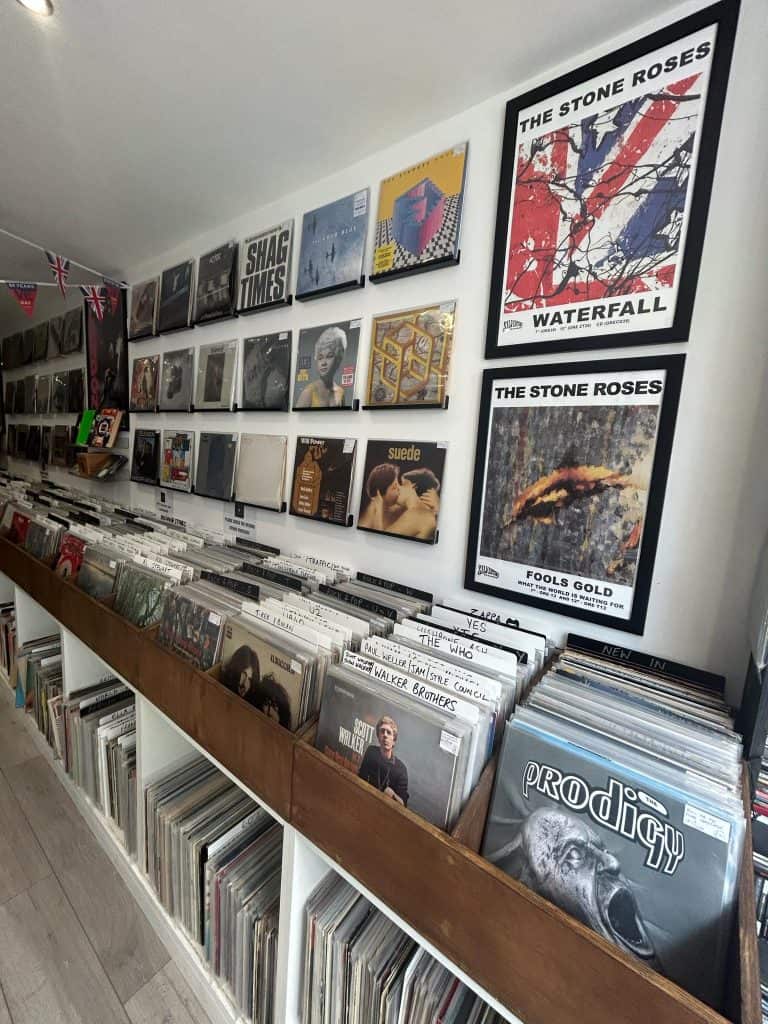
Tower Music via Discover Darwen
There is something appealing about a proper pair of speakers positioned across a room, especially when you sit down and actually give an album your attention. Yet dedicated listening rooms have always represented the fortunate end of the spectrum.
Most people’s relationship with music has been much messier. Records were played in bedrooms, student houses and cramped flats long before streaming arrived. The equipment had to fit around the room rather than the other way around.
We have previously seen that approach in our Gadhouse Cosmo turntable review, where the attraction came partly from combining vinyl playback with built-in speakers and Bluetooth in one relatively compact unit.
That kind of simplicity has become increasingly relevant as vinyl finds listeners who may love the format without having much interest in building a traditional component system.
A turntable with its own speakers removes several decisions immediately. There is no separate amplifier to find space for, fewer cables to manage and no need to work out where a pair of bookshelf speakers will live before the first record can even be played.
For a bedroom or small flat, a record player with built-in speakerscan therefore make practical sense, particularly when space matters more than building a traditional component system from day one.
However, convenience comes with an acoustic limitation. Speakers sitting only a few inches apart cannot create the same sense of width as two speakers positioned farther from one another. That trade-off is worth understanding before deciding which type of setup fits the room.
Compact record players have sometimes earned a bad reputation because the cheapest examples can prioritise appearance over the parts actually touching the record.
That makes the mechanics worth checking. A replaceable moving-magnet cartridge, sensible tracking force and a properly supported tonearm are more meaningful than whether the cabinet looks suitably retro.
There is also value in choosing something that can grow with the room. Some all-in-one systems include a line output, which means external powered speakers can be added later. Therefore, starting with a compact setup doesn’t necessarily lock someone into built-in speakers forever.
It can simply be the version that fits now.
This shift would matter less if vinyl were surviving only as a niche collector format. Instead, physical records continue to move in serious numbers.
The Guardian reportedthat UK vinyl sales reached 7.6 million LPs last year, based on BPI figures. That represented a 13.3 per cent increase from the previous year and an 18th consecutive year of growth.
Some buyers will eventually build elaborate systems. Others may simply want a favourite record within reach of the desk where they work, draw, play games or waste an evening online. Both are perfectly recognisable ways of living with music.
A bedroom stereo doesn’t need much territory. A sensible version might look something like this:
- On the shelf:the turntable, sitting on a stable surface where it can stay level.
- Within reach:the handful of records currently getting played rather than the entire collection.
- Kept away:objects that rattle, wobble or transfer unnecessary vibration into the player.
- Possible later addition:a pair of external speakers if space and budget eventually make them worthwhile.
That leaves the setup small enough to coexist with everyday life, while still giving the record itself a little room to breathe.
The continuing appeal of records was never dependent on recreating somebody else’s perfect hi-fi system. For many listeners, half the pleasure comes from choosing an album, taking it from the sleeve and letting one side play without immediately reaching for another song.
Compact systems make that ritual easier to fit into homes where space is already spoken for.
A bedroom, flat or shared house may never become an audiophile listening room. However, it can still become the place where a record gets played so often that the opening seconds begin to feel like part of the room itself.