

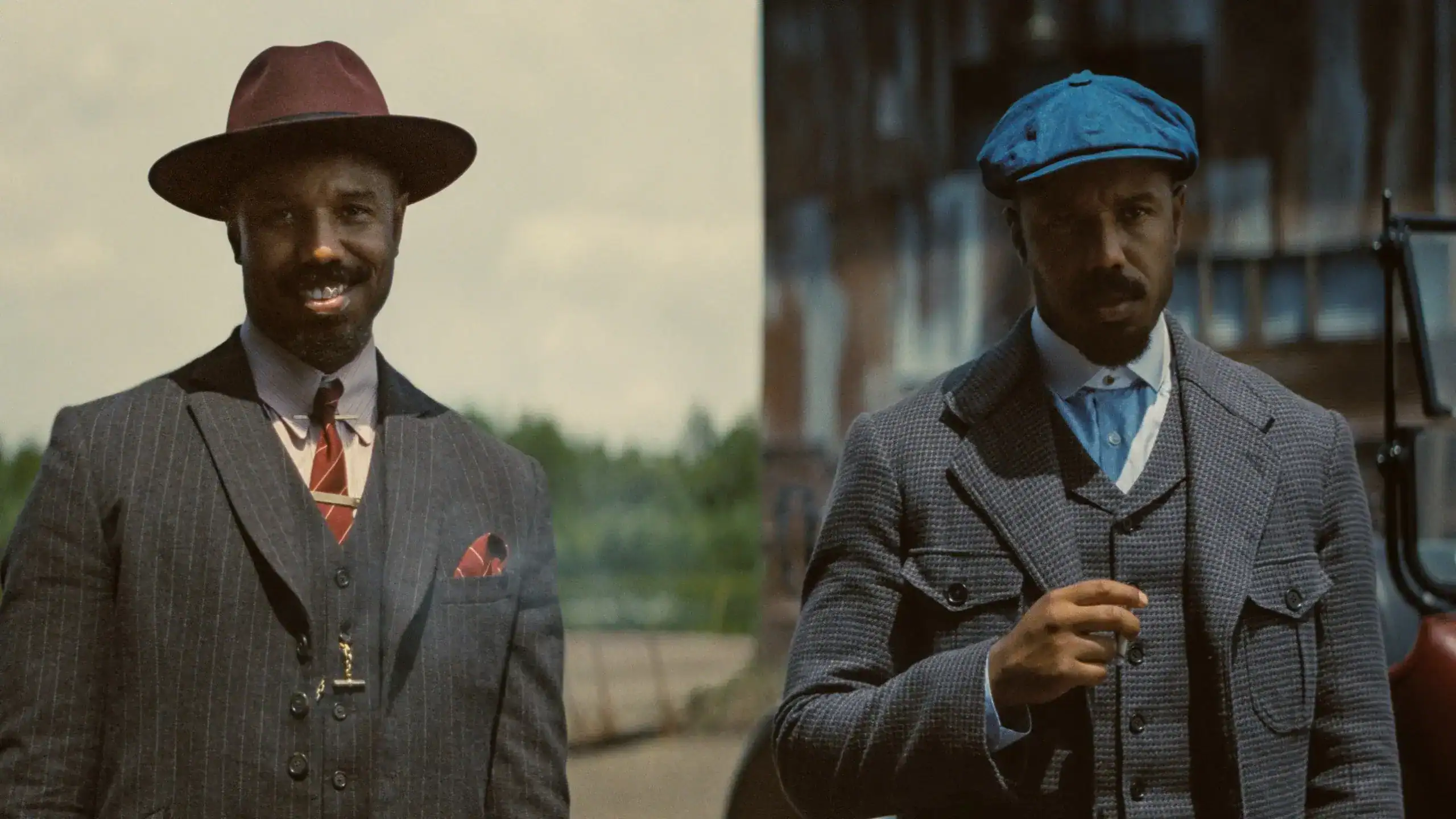
Director of the soon-to-be Black Panther trilogy, Creed and more recently Sinners, which would go on to win 4 Oscars out of a historic 16 nominations earlier this year. Ryan Coogler shares his creative process and how he was able to pull off his most ambitious experiment yet. Returning collaborator Michael B. Jordan also offers perspective on his twin-led role alongside starmaker Miles Caton, who delivered his debut performance. Sinners is a story of twins and a young singer reuniting in their hometown, only for vampires and the devil’s music to enter their lives and threaten to tear their world apart in one night. Soundsphere dives into the history of music, filming high concepts and the legend behind this cultural phenomenon that took the world by storm, uniting audiences through the power of culture, music and our longing for grief.
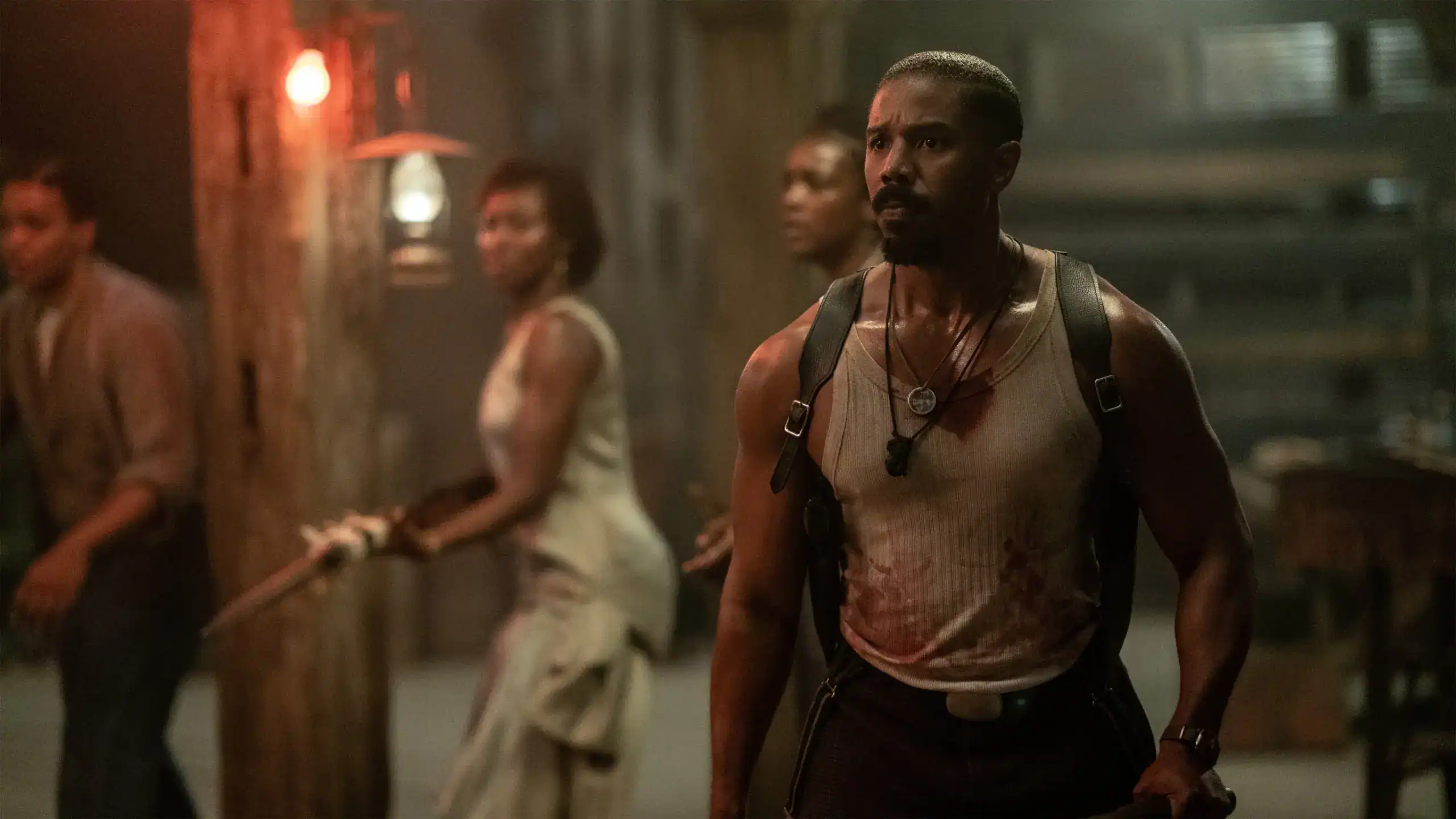
Sinners, courtesy of Warner Bros
Soundsphere] Filmmakers sometimes say there are three films. There’s the one that you plan. There’s the one that you shoot, and there’s the one that you edit, and they can be the same film. Sometimes they can be different. How much did the film change from original conception to final execution?
Ryan Coogler] I think all of those elements were there in the initial screenplay, but they weren’t as fleshed out as they were. I always said the film got much richer than the film that was written. It was primarily from the contributions of the actors, as well as my heads of department. Everybody brought their full selves to this, all their ideas, and a lot of personal stakes were brought into a movie in a way that I could have never imagined. So the film that we actually shot got much bigger and richer than anything I could have imagined in the screenplay. And then the film changed more in the edit as well. My mom came and saw it while we were at one of the earlier cuts. She had a lot of notes. But we found some brilliant juxtapositions, a different opening I thought that was initially written, and working with my picture editor, Michael Shawver, since we were in film school together. We found so much in these guys’ performances over a lot of time, maybe missed on the day or in total knowledge, and were able to craft something. I’m in awe of what we finished with, to be honest with you.
Soundsphere] What point in your life as an artist (Michael) led you to the path that you are on now?
Michael B. Jordan]Oh man. It is a combination of everything. I don’t think it’s one moment. It’s been a constant ride. An exploration of just expression, taking home personal experiences and how they translate to you in narrative, in telling these stories so it can never be just one moment.
Soundsphere] During that creative process, what was the thing that surprised you the most?
Ryan] That’s a great question. It started from a place in my life with my late uncle, who introduced me to blues music. He died in 2015, and he was the oldest man I knew for most of my life. I wasn’t able to be there when he passed away because I was working on a movie, on Creed. I think the guilt is embedded with that sense of longing and grief, but also love and nostalgia. Somehow everybody on the movie brought their version of that, and every once in a while I would hear about a particular relationship that somebody had that was at the front of their mind while we were working on the movie. The best example would be Jack O’Connell, who was watching from out here. His father passed away when he was very young; I believe he was a teenager. He was an Irish immigrant and would talk about his dad all the time during the shoot. He wanted his accent to be like his father’s when he did the Lord’s Prayer and recommended Wild Mountain Thyme for the scene; he played music because it was a song he listened to with his dad.
The night that we filmed the exterior surreal montage, we shot the semi while I was there singing with the fire. That was the same night that we shot The Rocky Road to Dublin scene, and right in the middle of shooting that scene, it’s like 3 in the morning, in a swamp in Louisiana, and Jack pulls me close, and he said, “Hey, today’s my dad’s birthday.” I was like, “Yo, what?” I thought I would start crying. And then he pulls me close again, and he says, “That’s my dad there.” So then we did another take where everybody rushes, and he looks up at the star before he closes his eyes. He ended up using that. But it was so incredibly moving. It was a lot of stories like that. I think everybody kind of left a little bit of themselves, a little bit of that grief, a little bit of that nostalgia in the movie.
Playing twins. Is that the best invitation an actor ever has, or is it the scariest project?
Michael] I should have had the twin here for me. I think it was the thing that made me the most nervous. But it was also the thing that made me the most excited about it, besides working with Coogler. When he pitched me the roles, he really encouraged me to embrace that side of it in the sense of, this is probably going to be the hardest thing that you’ve ever had to do, but thinks it’s a great idea for me.
How did you start? Was the big thing to differentiate them? If it was, which one did you start with?
Michael] I kind of started with both of them. It was the idea that our childhood trauma shapes all of us as people. Our experiences as kids and Smoke and Stack had a very challenging start to life. They had this moment where they lost their mother at birth, and the youngest one in Stack, the father, kind of held that against him a little bit growing up. They had this very complex relationship with their father and let that manifest in how they carried their trauma throughout their lives; Smoke internalized it, he didn’t talk a lot and didn’t have a lot to say. He carried that thing and buried it deep inside of him. Stack’s a little different. He uses charisma, his charm, and his levity, and he’s constantly moving from one thing to another because he didn’t want to sit still long enough to kind of think about it. So, I kind of started from there, and that manifested itself in how they walked, the cadence and their speech.
How did you do it? When you were in scenes together, it seemed seamless?
Ryan] I could jump in here. We had the cash. The first thing I did was call Sean Durkin, who’s a filmmaker from the States who actually works out here a lot. But I met him through the Sundance Labs. He did a film called Martha Marcy May Marlene, which is kind of like the breakout movie for Elizabeth Olsen. He very recently did a show called Dead Ringers. It was like a reinterpretation of the old Cronenberg movie, with Rachel Weisz playing identical twins. It’s a ton of switches. I watched the pilot for that show, and it blew me away. I know Sean, so I called him up and asked him how he did it. He got me a little cheat sheet to start with. We hired our visual effects supervisors, and they came in and broke down 3 different methodologies that we could use. One is your basic standard split screen where the camera doesn’t move. In that process, we forget we have to cast a twin, though. We had to find somebody who could act, who also had a physical build with complexion and shape that was close enough to Mike, so I think it could be a good eye line for him. As a German, personal bill, we found. But then once you get that done, you’ve got a solid methodologist; you can do a switch screen, which is a basic all-parent track type technique. That’s fine as long as the characters don’t have any type of interaction or are comfortable not wanting a movie camera.
The next bit, which is what we use most of the movie, I would say 70% of the 20 shots we use, is technology, which was called a techno doggy, which is essentially a poor man’s emotional control unit, where you can program moves, up to a certain extent. With that, we could have a moving camera, and that becomes infinitely more complex, because the camera’s moving, and if you have other things moving in the scene, a car, other actors, you’ve got to be cognizant of that. Michael would do one performance as one of the twins; usually, the other performance would be there. After we got a type that we liked, we would be married to that type, the timing of it; we would have speakers with 80-yard beach speakers with Michael’s audio as the twin first. They would switch places. So might have to run off, change, come back as a new twin, and shame with Percy. I still look at it. Then we were running again with that timing, especially edited on the day, select our taste. Then we would have to merge those types. But what would come with that sometimes is a tennis ball patch. If there are things behind one of the twins that are included, say Miles there, as it will be sometimes, or Hailee, or another actor, you have to do a pass without both twins. Both the speakers play the twins, and we would marry that.
The last one, which is the most technologically complex, we would use a Halo rig, which was a system of 8 4K cameras. It looked like iPhones. It was just 8 lenses in an array. We would put this thing on a mic, and then he would have to act, do the full performance with this rig on. Do his movements, so we had all that captured, and that would then be projected essentially on Percy’s head. Those were for when there were tremendous amounts of physical interaction, or it was a camera that couldn’t be revealed, on a steadicam. I was saying that ended up being around 30% of the twin shots that we saw, predominant when they’re fighting each other in a couple of the complex state camp shots. It was Blue Boire with this man who was able to do, in terms of his performances, he made it look easy, but it got to the point where you can tell which twin was coming to set, just about how they walked and how they started; you had your back turned. If you heard people laughing, he’s cracking jokes and stuff; you can hear it. He was Stack. You can hear the ripple of them coming through. Then the same body would be Smoke; people would get out of his way. There was a coldness to him when he would come to shed. That was really creepy.
Soundsphere] You are such a talented singer. Where did that come from?
Miles]I come from a musical family background and grew up in Church singing. I just grew up around the music business so I always had that and started singing background for R&B artists on tour and I feel like that was a turning point for me because I got to learn so much about the world and travelling, performing, working on my craft. In doing that, so many more opportunities came like this film.
Soundsphere] You are in the middle of a brilliant musical career. And then you suddenly get the call to come and act for Ryan Coogler, and with Michael Jordan. Was that intimidating, or was that irresistible?
Miles] Definitely irresistible for sure. I remember being in a theatre, watching Black Panther, just having that feeling that we all felt during that time, and then fast forward to be able to work with these guys and have that same impact on the next generation is a 360 moment for me. So it’s honestly an unbelievable experience to work with both these guys, and I’m extremely grateful for this opportunity.
Soundsphere] Your ability to listen in the movie was so natural. When you were still, we could read so much. Did that come from your instincts or from Ryan and Michael’s advice? How did you find your way to Sammie?
Miles] I feel like it was a mix of everything. It started after reading the script, getting an understanding of the character, and having conversations with Ryan through Zoom before production about Sammie’s character and the importance of his character. He explained Sammie to me as the lens for the audience; what we’re seeing, what Sammie’s experiencing, is the same stuff that the audience is seeing. So he’s the lens, the guide for that. Once I understood that, that started my process. When I worked with Beth McGuire, an incredible acting and dialect coach, she really helped me to break down the script and start to build a process of how I would go about acting and trying to get different emotions and stuff. Once I got on the set, I was able to see everybody’s different processes; Michael’s process is incredible. The work that he puts into developing the characters, I remember there would be days where we would go over the lines, and I would see how he annotated and made notes about Smoke and Stack and how he dug deep into finding why they do what they do. That was something I definitely took into my process, and it made it really clear for me to see what’s important to Sammie, why he’s doing what he’s doing, what his goals are, and what he’s chasing.
Soundsphere] So in these 2 different characters that are involved with 2 complex love stories, one that is underpinned by grief, and another one that is underpinned by betrayal or rejection. Both men love these women. The relationships are very grown-up. It seems to be very thick and very rich, and you got to play with 2 phenomenal actresses. What was it like playing those relationships and working with those 2 fine artists?
Michael] It was an amazing experience getting to know the twins through the people that love them, and knowing the best was very interesting, and the dynamics of each partner, the way they treated the other brother. Stack and Mary had a very passionate, fierce, intense, almost toxic at times dynamic. The reality of why they could never be together: Stack communicates and talks, but he also lies a lot. I think there’s a moment, a scene in the film, when he finally tells her the truth about why they can never really be together, and that’s something that he kind of eluded for a really, really long time. It kind of ran from him a little bit. So that kind of dynamic was very layered to play. Hailee is a phenomenal actress and has been working since she was young, and to see her blossom into the most mature and grown version of herself thus far, she was a very generous scene partner, and we would exchange playlists and songs and music. Music was definitely another language for us throughout this movie to communicate through these scenes and through character. So we would listen to a bunch of music together and figure out where we were in certain moments, and you were quite different.
Their trauma, their struggle came through loss, which you can find out throughout the film. That pain of loss caused their own troubles and obstacles, shaped how their relationship developed, and what was truly incredible was that it became the voice of wisdom throughout the night. She was the one that everybody kind of went to. She was the mom of the group, who took care of everyone and gave them all the information on how to survive a bit. Also, the idea of what identical twins are, how special and unique that relationship is. They’re really the same, but different. When it comes to relationships with women and a significant other, that puts a strain because you’re not getting one; you get two. When it comes to a significant other that wants to feel like they have them, knowing that you would almost always be 2nd to the brother puts a certain complexity to those dynamics, and you would feel that throughout the movie. I thought that was pretty interesting.
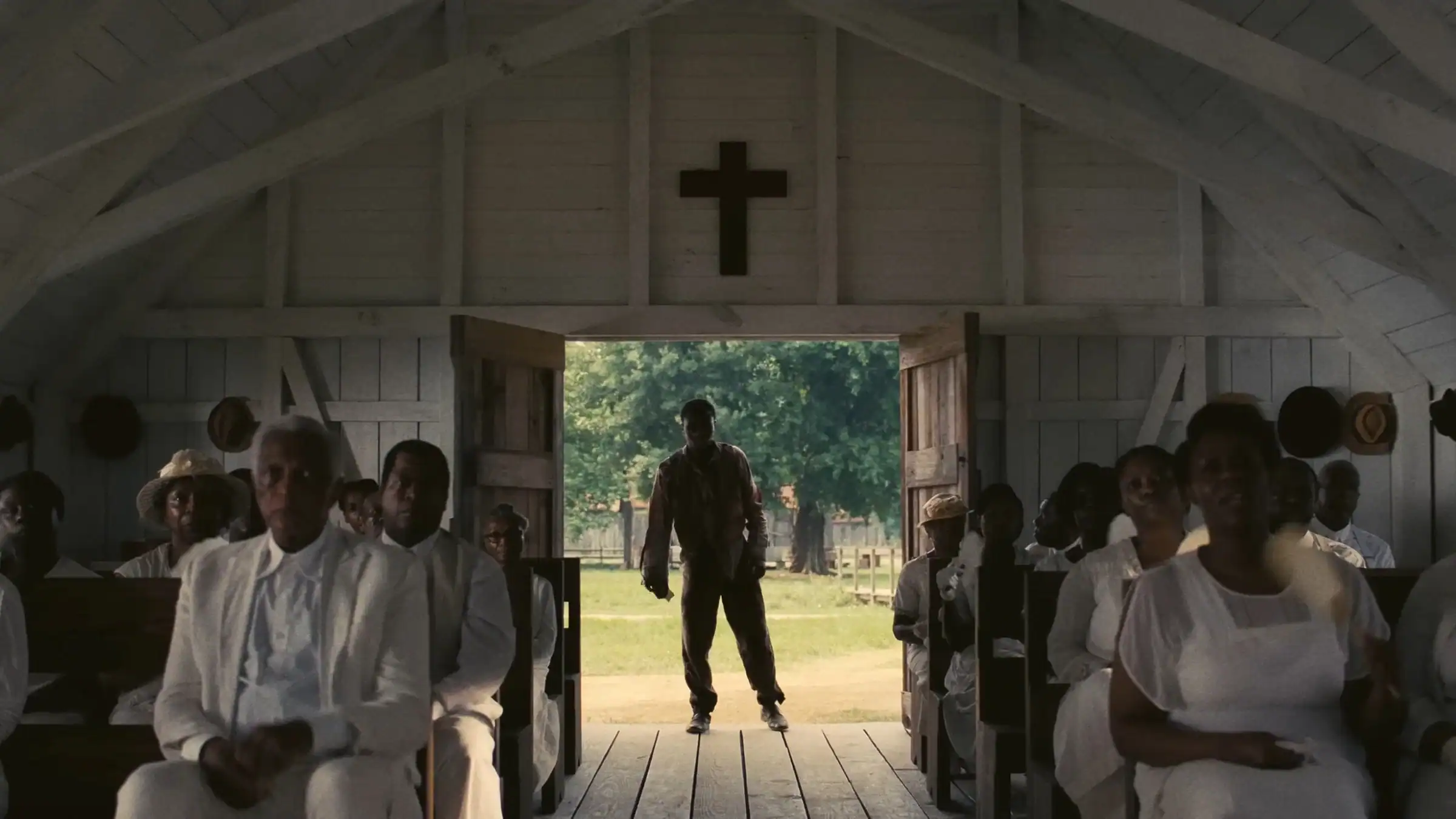
Sinners, courtesy of Warner Bros
Soundsphere] There was a lot of heavier music in the film. Not just the blues but Metallica too. Can you talk about that?
Ryan] Absolutely. So I love Metallica, and for the pacing of a movie. I wanted it to feel like the Metallic song one. If you ever heard the song. Love thing, yeah. For me, the whole process, it was like a 360 process for me, growing up in the Bay Area, where some of those guys live. I was a hip hop and R&B kid, born in 1986. I’ve been listening to ” Wrap My Heart ” my whole life. We had a radio station called Cameo on the front. It was one rock song that I remember playing on a radio station and breaking through what we have called the 7 o’clock drop. You had to get caught in and requested, and it was Teen Spirit. I didn’t listen to rock, but I remember absolutely loving that song, and I can never understand. I’ve never totally understood why. I got older, obviously, and my uncle died, and I started listening to the music, and he would play.
I went to film school, met movie, like, you know, random, you know what I mean? He was a jazz guitarist, but also like a rock guitarist. When we met, I actually asked him one day. I remember I’m like 21 years old, we’re walking across the campus of USG, and I’m like, “You’re in a composer school, right?” And he’s like, “Yeah.” And I’m like, “So can you play the instruments?” He fucking lied to me. He said no. He was completely lying. But he said, “But I play guitar really well.” I found out he plays every instrument but he is an insane guitar player. When I wrote this screenplay, I was researching. I realised that the blues gave birth to pretty much all rock and roll music. When you talk to music colleges, they’ll tell you that the closest relatives to it are grunge music. That tells you straight up and down that that’s blues music coming out of the Pacific Northwest, played by white blues. So it started to make sense when I went back and listened to Nirvana. I’ll find out when it’s time to research shooting locations in Mississippi.
Ludwig is like, “Y’all want to go, and I’m going to take my dad with me.” His dad was born and raised in Sweden. I find out that his dad became a guitarist because he went to a booze concert about Hooker. At a time when black people couldn’t tour in the United States, they started to tour in Europe with rock musicians. His job becomes a blues guitarist and a music teacher; he has a son, teaches his son guitar on Metallica riffs, that son moves to LA, meets me. We make a bunch of movies together, and then we get the dish. So it was mind-blowing that this music that my uncle listened to. That affected the world and even affected my life. One is my favourite rock and roll song.
Soundsphere] For the oner, about music in the past, present and future, did you choreograph that scene?
Ryan] We worked on it really hard. We prevised it, and the whole cast and crew is really excited about that scene. Everybody would read the script, and that would be the scene that they wanted to talk about. We got an incredible songwriter Raphael Saadiq, who’s from Oakland, crazy enough, and worked with Ludwig, and basically said, “Hey, I’ve been having this blue swarm on my head my whole life. I think it’s a good time for it.” Wound up being perfect for us. Miles killed it, and then our producers set up rehearsals for us. I think once a week leading up to the shoot, we would get in there with the stand-ins, the dancers, and the choreographer, and we would time everything out. The IMAX camera could only hold 70 seconds of film. So it’s a stitched shot of 5 different shots put together. The shoot was about 2.5 days. The department heads went crazy for it. I’ve never seen Ruth actually. Ruth’s been making movies since I was a baby. So I knew we had something good, with Ruth running around. The whole cast and crew got involved. It was great on set with his Pro Tools. So whenever we would need an extension on timing on a cut, he would just adjust the music, literally in the track. So we could stay on target. It was really fun.
Soundsphere] In terms of the mythical allegory and biblical nature. Things are often in threes. How was working with an intimacy co-ordinator?
Ryan] We had a great intimacy coordinator. Everybody was safe. I won’t speak from that.
Michael] I approved that, we were safe.
Ryan] So, funny story here. While the intimacy scene was happening, I got bit by the biggest horse fly I’ve ever seen in my life, and I had to call cut cause I was in so much pain. Threes, and we should ask about the artists in formation threes. The film is dealing with the contrast between the sacred and the profane, Christianity, and the quote-unquote Devil’s music, as it was called at the time, blues music, and how much they have in common. We were having a lot of fun with it. In Christianity, the Trinity: the Father, the Son, the Holy Spirit. We were playing with that quite a bit—a lot of trios in a movie. A lot of stumps in Blues, in the 30s, in the pelpal moon, and then we triple it up when the dude was getting shit kicked out of him.