

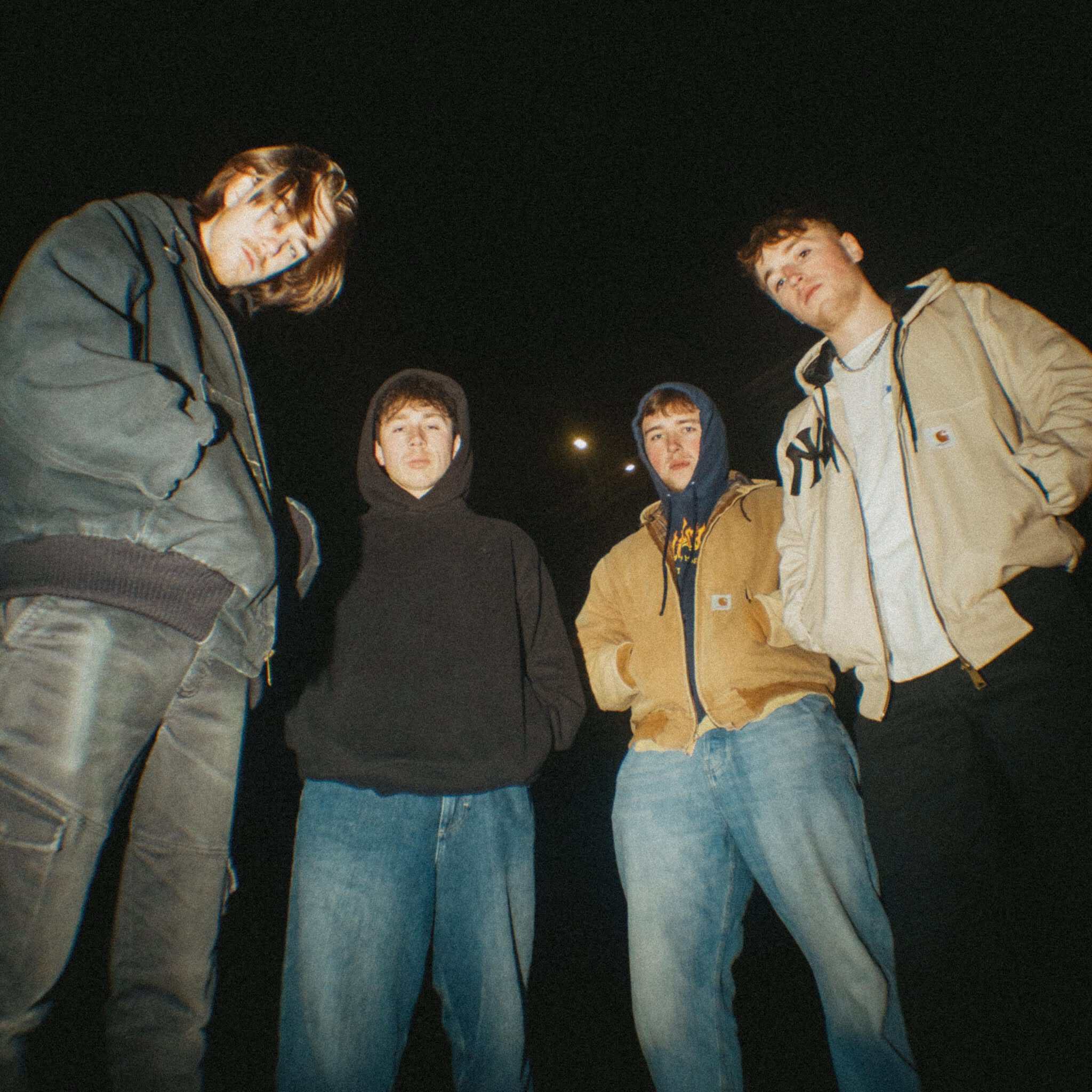
After years of grassroots gigs and playing to near-empty rooms, Newcastle band Overgrown are stepping onto bigger stages. Ahead of a tour with Sevendust, bassist Elliot Johnson and drummer Mike Essery talk about finding success on their own terms, making music that feels real, and why sometimes the best thing you can do is put the song out.
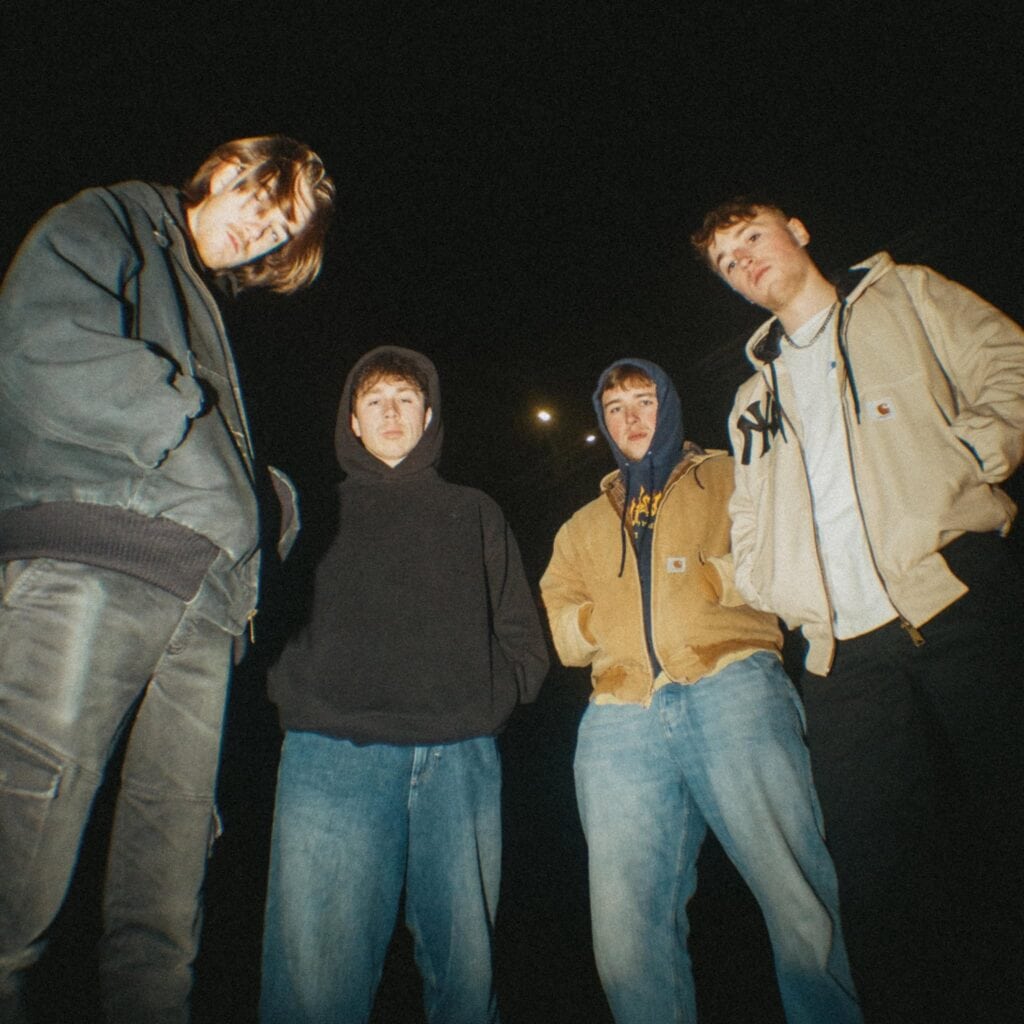
For Overgrown, success hasn’t arrived as the result of a meticulously engineered plan. It began with songs Callum [Ter Morsche] wanted to write, a band who wanted to play them, and a decision not to wait until everything felt perfectly mapped out.
Now, the North East band are preparing to tour with Sevendust, a band whose music helped shape the heavy sounds they grew up with. They have played to crowds numbering in the thousands, supported established acts including Alter Bridge, and built a substantial audience online. In the interview, Soundsphere’s Dom Smith points to Overgrown having around two million Spotify listeners. But for bassist Elliot Johnson and drummer Mike Essery, the numbers are only one part of the story. “We’re playing the music we want to make to begin with,” Johnson says. “We love this sound. We love the bands we love, and we try to bring our own stamp on it through our various influences. The fact that people dig it is really amazing. We’re super grateful for it, just loving every minute of it.”
That sense of gratitude runs through the conversation, but so does a clear-eyed understanding of what matters to them. The band have spent years playing small shows, building relationships and finding their footing in music. Bigger stages and a growing audience are extraordinary, but neither has changed the basic reason they started.
Essery puts it simply: “As long as it’s really enjoyable, as it’s all been so far, there hasn’t been a time where we’ve thought, ‘Oh, I wish this wasn’t a thing.’ It’s all been so much fun. It’s been the best times of our lives, and that, to me, is the success of it.”
A nostalgic, heavy sound…
Overgrown’s music draws on the alternative heavy sounds that shaped their younger years: nu-metal, grunge and the broader rock culture around them. Those influences are audible, but the band are quick to resist the idea that they sat down to assemble a trend-friendly recipe.
Essery says the group’s rise began with Callum writing demos that didn’t quite fit his previous band. The songs needed somewhere to go; Overgrown grew around them. “There was no thought behind it in terms of, ‘Oh, we need to sound like this,’” he says. “It was just the music that we like to play.”
The timing may have helped. The revival of heavy, turn-of-the-century sounds is often described as cyclical, with listeners rediscovering music that once dominated rock radio, video games and wrestling broadcasts. For Essery, that nostalgia is personal. As a kid, he remembers encountering bands such as Slipknot, Chevelle and Limp Bizkit through his brother-in-law, while games and other media introduced him to riffs, big drums and heavy soundtracks. “I think it’s just what we thought was cool when we were younger,” he says. “Now you have a chance to kind of think, ‘Oh, try and recreate what you liked.’”
Johnson sees another reason these sounds connect: their physicality. He suggests that after years of heavily processed production, there may be a growing appetite for music that feels more organic. Overgrown tried to preserve that quality on their EP Waiting Room, using real amplifiers and large cabinets in the studio, with the drums kept raw and the performances largely built from whole takes.
“We used real amps and big cabs, mic’d up in the studio, just kept it super raw and super real,” Johnson says. “I think people are yearning, not just in music but in general, for the real. The authentic connection.”
That isn’t a rejection of modern production so much as a commitment to the character the band wanted their songs to have. The point, Johnson suggests, was to make the recording feel like the people playing it: direct, human and not overworked.
From the bar staff to thousands
The scale of the crowds Overgrown now play is a striking contrast with the years that came before. Johnson explains that three of the band’s members, Mike, Callum and Marc, had already played together for around six years before Overgrown. He had spent a similar length of time in bands. They weren’t newcomers to the work of getting a project off the ground; they were musicians who had repeatedly performed at local level, sometimes to little more than the bar staff.
For Johnson, the step up to larger audiences is already a dream fulfilled. “This year in particular has been just absolutely full of my dream come true,” he says. “Playing to thousands of people sometimes—when you’re playing guitar in your bedroom, that’s all you dream of. Maybe one day I could play to a crowd that size. We’ve done that many times over this year.”
He’s also found affirmation in the way other musicians have responded. Encouraging messages and conversations with bands they admire mean a great deal to a group who have spent years as fans as well as performers. “To get acknowledged from the bands that we look up to is just an incredible feeling,” he says. “You couldn’t ask for more than that.”
The experience hasn’t made the band dismiss the value of audience figures. Essery acknowledges that more listeners and more opportunities make everything sweeter. But he sees a danger in treating growth as a finish line that keeps moving away.
“Of course, the numbers make everything sweeter,” he says. “But are you enjoying it? Are you doing what you want? If that’s the case, then I think that’s the really cool part.”
A local team, built on friendships
Overgrown’s momentum is connected to a community that began long before the larger shows. The band’s creative circle is rooted in the Newcastle area, and several of the people helping them build the project are friends they first met through other bands.
Essery points to Sam, who works on the band’s visuals and has played in another group with Johnson, and George, their local producer. “Our whole team is just our friends,” he says. “That, for me, has been the local-community side of Newcastle.”
Johnson describes the same network as part of the band’s musical foundation. The people involved aren’t simply collaborators brought in after Overgrown started to grow; their relationships were already there. He recalls that in his earlier band, Mike’s group opened for them at their first show. The connections between projects were being made at the grassroots level, years before bigger opportunities arrived.
The band also speaks warmly about other musicians in the area. Essery says bands they played with, and friends made through those bands, have been supportive as Overgrown’s profile has risen. Rather than a scene defined by competition, he describes people trying to help one another along.
That support extends beyond the local circle. As the group prepares for the Sevendust tour, they’re mindful of the acts who have taken them out on the road and treated them well. They know what it means to be a band given a chance, because they remember the years when every opportunity was smaller and harder won.
No formula for the breakthrough
Smith asks whether the band have experienced a north-south divide in the music industry: whether geography affects who gets access to resources and opportunities. Essery says he hasn’t personally felt a divide between bands, though he recognises that parts of the industry are concentrated around London and that travel can be a practical obstacle.
His bigger point is that an audience can find a band regardless of where they are based. Overgrown started drawing attention through short-form online videos before some of their songs had even been released. For Essery, that response was evidence that the material was connecting, not proof of a secret strategy.
“We didn’t go away and brainstorm this huge idea and formula of how we were going to capture views and an audience,” he says. “It really was Callum writing demos that didn’t fit the sound of a previous band, but he still really believed in those songs.”
Johnson agrees that the band didn’t set out to manufacture a breakthrough. The music and the content found people, and the people who responded helped create opportunities. He describes their rise as a mix of hard work, timing and luck, without pretending any one of those elements explains everything.
“I’m not going to say there’s no luck involved, because of course,” he says. “But I think you’ve got to almost make your luck and put yourself out there first.”
Johnson’s advice to other musicians is to resist waiting indefinitely for an idea to become flawless. A song kept under wraps can’t connect with anyone. Putting it out carries the risk that it might go unnoticed, but it also gives it a chance to find its audience.
“The worst thing that happens is, maybe no one sees it,” he says. “But at least you’ve given yourself that chance to be seen.”
Johnson’s practical advice sits alongside Johnson’s description of the band’s rise as a kind of “divine intervention”: the feeling that the right music, people and opportunities happened to align. The two ideas aren’t in conflict. Overgrown can recognise how much they’ve worked for their progress while still being astonished by the way things have fallen into place.
Music as release
The conversation also turns to whether Overgrown’s music offers catharsis—not only for listeners, but for the people making it. Johnson is careful not to speak for the band’s lyricist, Callum, whose words are personal. But for him, playing the songs, recording them and performing live can create a kind of escape.
“Especially playing it live, it’s like you switch off from everything else,” he says. “You just forget about all of that.”
Johnson echoes the feeling, describing the act of playing music as a source of validation. He has followed what he enjoys, stayed close to music, and now sees that commitment carrying him onto stages he once imagined from his bedroom.
“When you get lost in it on stage, and then you come out of that and realise what you’re doing, it’s just… there’s no better feeling,” he says.
There’s a generous quality to the way the pair talk about that experience. They hope listeners might find their own release in Overgrown’s songs, but they don’t claim to know exactly what the music means to anyone else. Their own relationship with it is enough: this is what they love doing, and sharing it has become the source of some of their most meaningful moments.
The next stage
The Sevendust tour represents a particularly personal milestone. The band are fans of the group they’re about to support, and the opportunity sits alongside other recent moments that have felt almost unreal to them, including playing with Alter Bridge. For Essery, each step has brought the same reaction: “What?”
That disbelief hasn’t dulled their appreciation of the people who made it possible. Johnson and Essery both return to the audience: the listeners who stream the songs, follow the band online, come to shows and help carry the music further. They want those supporters to know that the connection isn’t something they take for granted.
“Any way of supporting is incredible,” Johnson says. “We’re super grateful.”
And while the crowds may be larger now, the guiding idea remains close to where Overgrown began. Make music they believe in. Keep playing. Stay connected to the people who helped them get here. Put the songs out, even if the path ahead isn’t guaranteed.
The band’s story is still unfolding, and the upcoming tour will bring them into rooms with a scale and history they once admired from the audience. But Johnson and Essery don’t describe success as arrival at some final destination. They describe it as doing the thing they love, with people they care about, and getting the chance to take it further.
Listen and watch: