
If you grow up in the UK wanting to be an artist, you’re still (often) fed the same script: If you’re serious about working in the creative industries, you move south. You move to London. That’s where the money is. That’s where the “real” scene is.
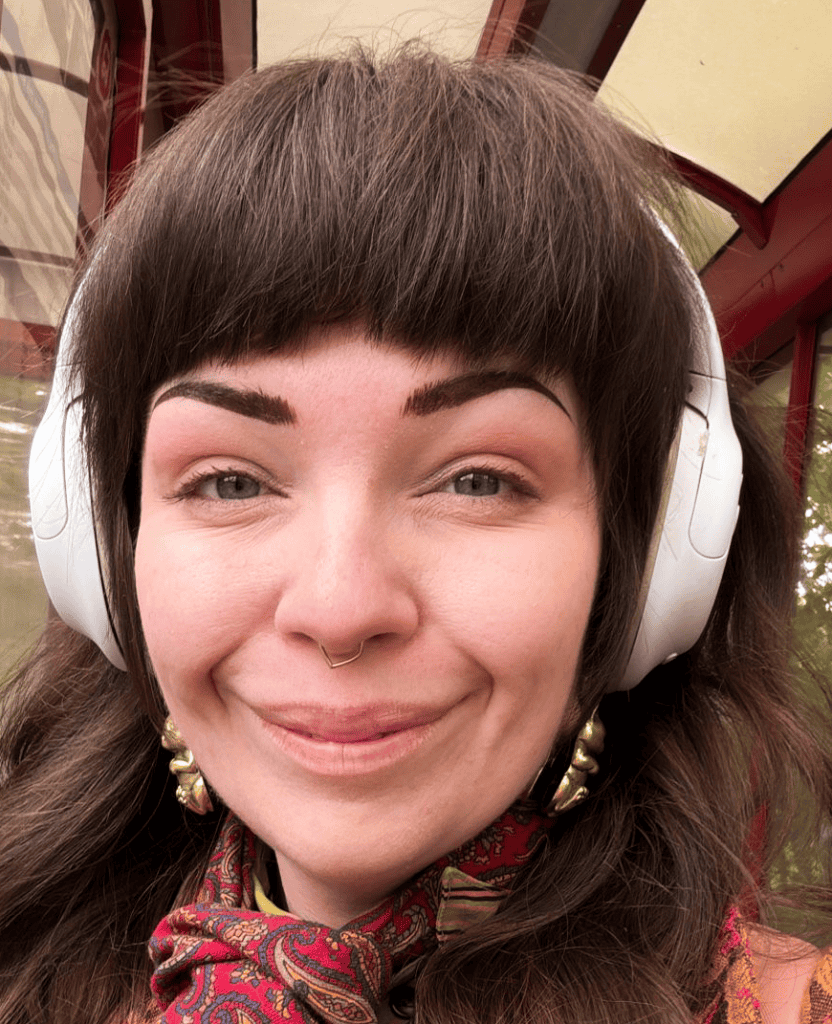
Molly
Leeds-based illustrator, cartoonist, and zine-maker Molly Grimshaw, better known as Molly Pukes, heard that too when they decided they were going to make a life out of drawing. “When I decided to become an artist, there was this kind of assumption made against me… that I need to go to London, I need to go south because that’s where all the money is and where all the clients are.”
They just… didn’t go.
They stayed in Leeds (because they hated planning travel), barely went further south than Manchester, and slowly built a full-time creative career from their bedroom, sketchbooks, zine fairs, community workshops, and a lot of stubbornness.
Twelve years later, they’re still freelancing, still in Leeds, and still proving you don’t have to uproot your life to make serious, powerful, weird, heartfelt work.
Making It Work in Leeds
At the start, it was scary. Everyone around them was saying the same thing:there’s no work up here. “In the early years of my career, it was very nerve-wracking. Like, I’ve got to find all the work here, and everyone’s telling me there’s no work.”
But once they actually put themself out there, told people they were available, started looking locally, started saying “yes”, everything changed. “As soon as I actually started looking, as soon as I started saying I was available, there’s loads of people. I think something that a lot of northern artists forget is that there’s northern clients and there’s northern businesses.”
The problem wasn’t that Leeds had no work. It was that everyone, including northern businesses, had swallowed the myth that “proper” artists live down south. “The reason why northern businesses and clients hire people from the south is because they are also under the belief that artists are from the south.”
Around 2015, through to lockdown, they saw a quiet shift. A wave of people just… stayed. “I like to think I was a wave of people between like 2015 and the lockdown… we just stopped needing to commute. We just stayed where we are.”
Channel 4 moving to Leeds helped. Animation studios started following. Suddenly, Leeds wasn’t a consolation prize, it was a genuine creative hub, full of cartoonists, animators, illustrators, crafters, and small studios doing big work. “There’s a really really big scene of creatives, like crafters, illustrators, specifically cartoonists and animators in Leeds… to the point where [we’re] rivalling Manchester in creative studio availability.”
Molly slotted into that ecosystem and built something that feels very much theirs: grounded, political, autistic, queer, funny, messy, and fiercely northern.
What Molly Actually Makes
Now, Molly moves between comics, zines, animation, and live drawing, but everything comes back to storytelling, especially stories about women, queerness, bodies, and survival.
As a cartoonist, they work in that sweet spot where the lines look loose and instinctive, but the emotional architecture underneath is heavy. Their comics are full of big feelings in small, punchy frames: anxiety rendered as strange little creatures; women literally stepping out of their own skins; queer crushes, bad decisions and moments of brutal self-recognition caught in a single panel.
They’ve done character animation and illustration for big players, including DC Comics, where they contributed to aPride anthologyproject, andChannel 4, where they worked onMe, My Autism and I, animating young autistic people talking about their lives and the objects that matter to them.
With DC, they were part of a collaborative commission that linked the world of capes and cowls to real queer and trans lives in Leeds. The anthology paired them with a local charity working with trans youth and their families. The brief wasn’t to throw a rainbow filter over a superhero; it was to make something that actually reflected what these kids were going through, socially, emotionally, practically. “It was a collaborative commission with a charity that was slash is based in Leeds that works with trans youth and their families… providing parents and families of trans kids… with resources and information in order to make that process… as comfortable as possible for everyone involved.” It’s a tiny example of the line they’re constantly walking: pushing queer, northern, grassroots realities into big, global spaces without letting the edges of those realities be sanded off.
Their work for Channel 4 sits in a similar space, but with a different focus.Me, My Autism and I is a short film made from interviews with autistic young people, each of them holding an object that means something to them. Molly’s job was to listen to their words and turn them into animation that actually felt like those inner worlds. “I worked with Channel 4 on a film called Me, My Autism, and I. I did the animation on that, and it was just about a group of young people talking about their experiences with autism, talking about getting diagnosed or self-diagnosing, whilst holding an object that was important to them… and that did really, really well. We got a Webby Award for that…”
For Molly, who is autistic themself, it wasn’t just another commission. It was a chance to take a way of thinking and feeling that they live with every day and build visual metaphors around it that felt accurate, not patronising — stimming as pattern, overload as shape and colour, comfort as a certain way of holding something in your hands.
Outside these big names, they’ve collaborated with local charities and grassroots groups — housing organisations like Acorn, post–sexual assault support groups, organisations working with asylum seekers. In each case, comics and zines become a way for people to tell their own stories without worrying about being “good at art” or saying the “right thing” out loud.
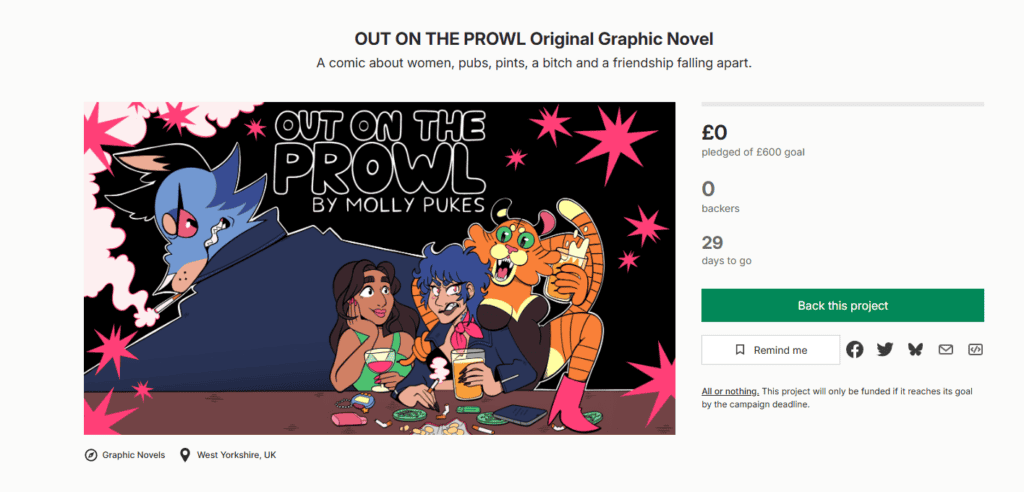
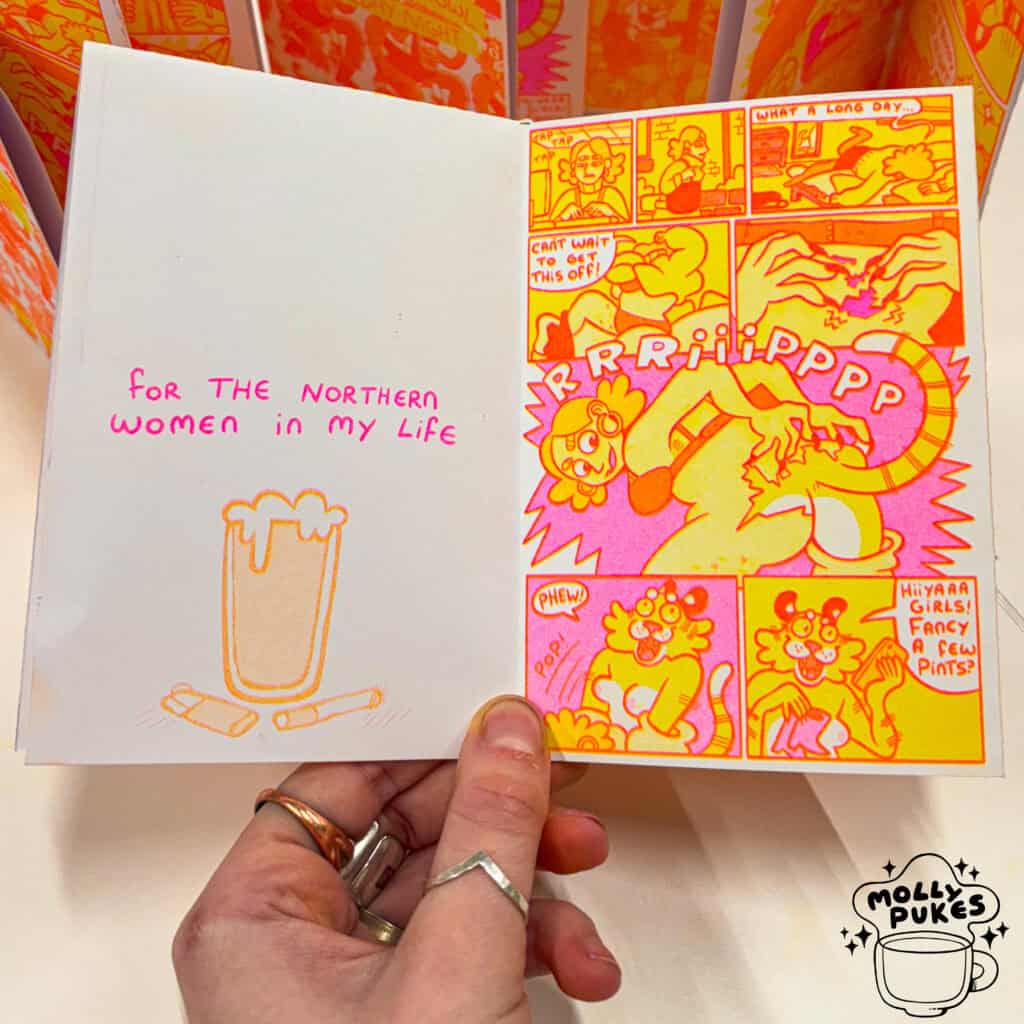
And then there are the worlds they’re building entirely for themself.Out on the Prowl, their in-progress book, is a prime example: a raw, queer, feral comic about messy women living messy lives, clawing their way through internalised misogyny and repression. “Out on the Prowl is a comic that I’ve been working on for a while… about messy women having messy lives and taking off their skin and becoming wild animals and just getting really pissed and smoking massive fags and then being a bit gay.”
The protagonist is a closeted lesbian wrestling with how she’s been taught to blame everything and everyone around her before looking inward. It’s gnarly, cathartic and very much not the neat, palatable version of feminism Molly were pushed towards in institutional spaces.
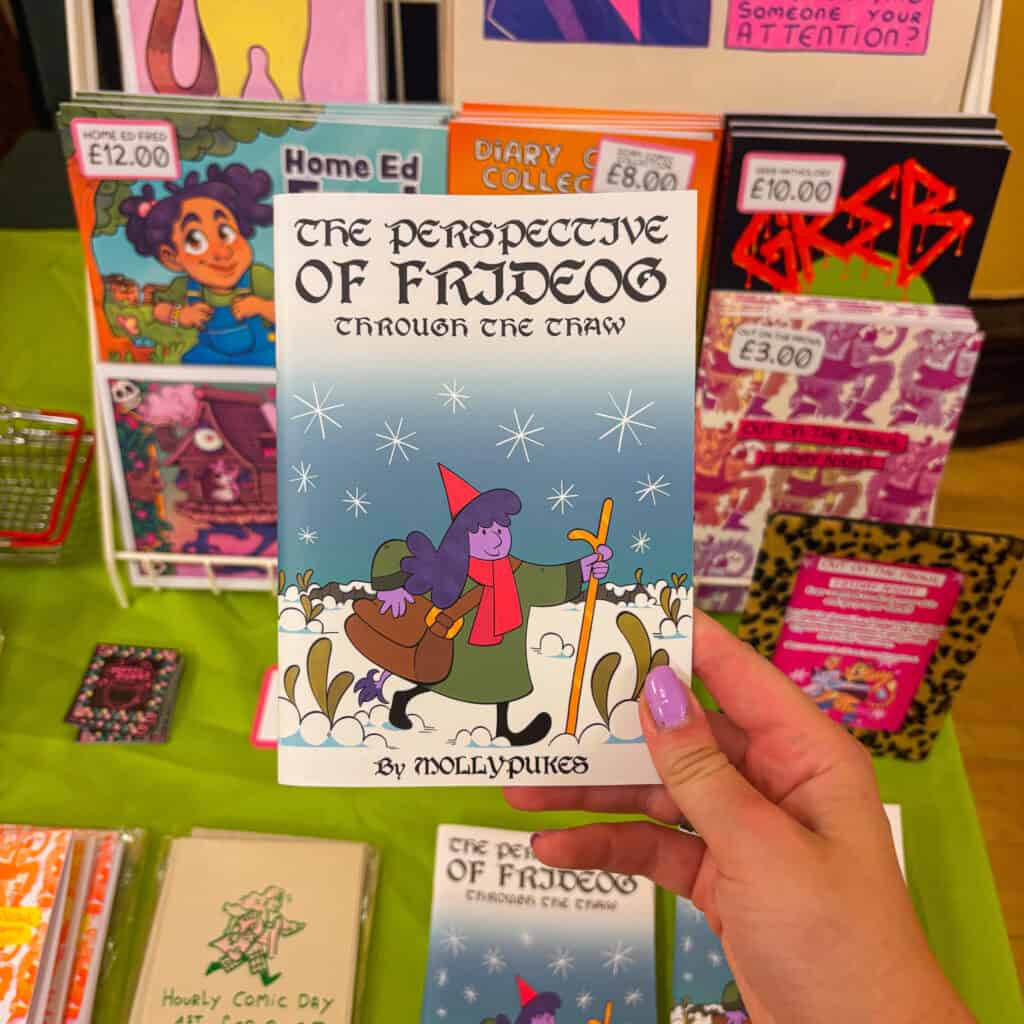
Alongside that, they’ve been developing The perspective of Fredeog, a softer, folklore-inspired project about tiny creatures with tiny lives that are actually not tiny at all, a kind of gentle counterweight to the intensity of Out on the Prowl, soaked in folk tradition and non-human perspectives. “It was just a really wonderful thing to have both projects on because one of them’s really sweet and one of them’s really gnarly and fun. But it’s kind of like that music thing…I need a balance. I can’t just dedicate everything to one feeling, or else it becomes too big a feeling, and I can’t cope with it.”
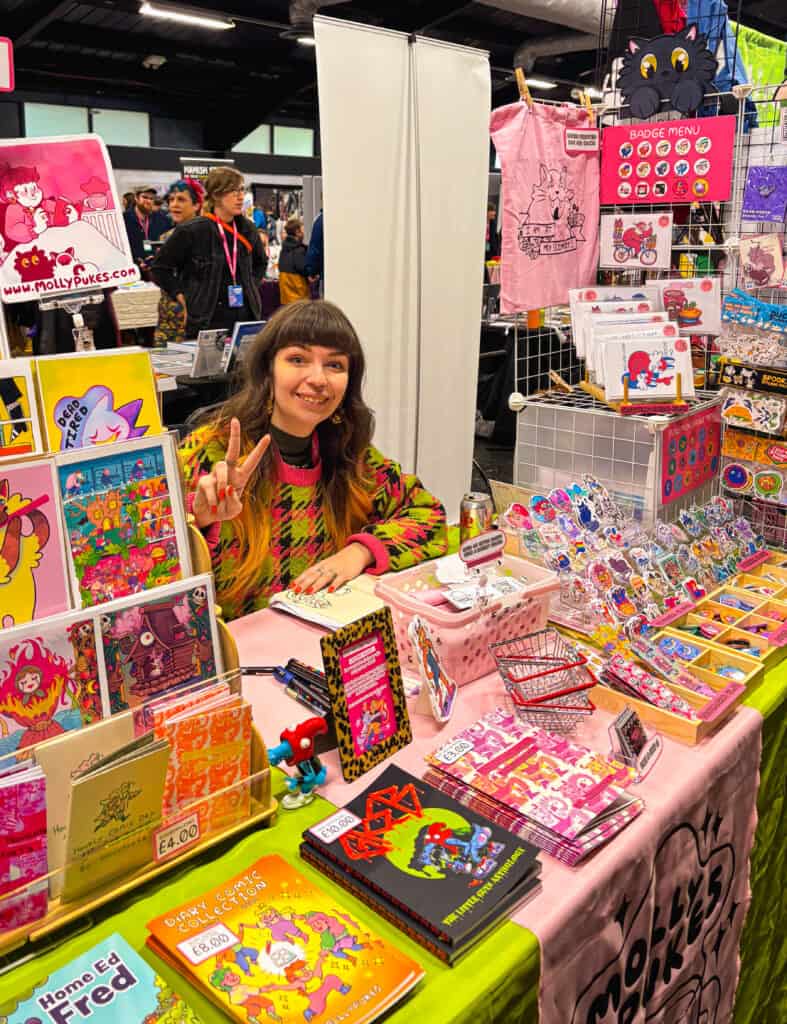
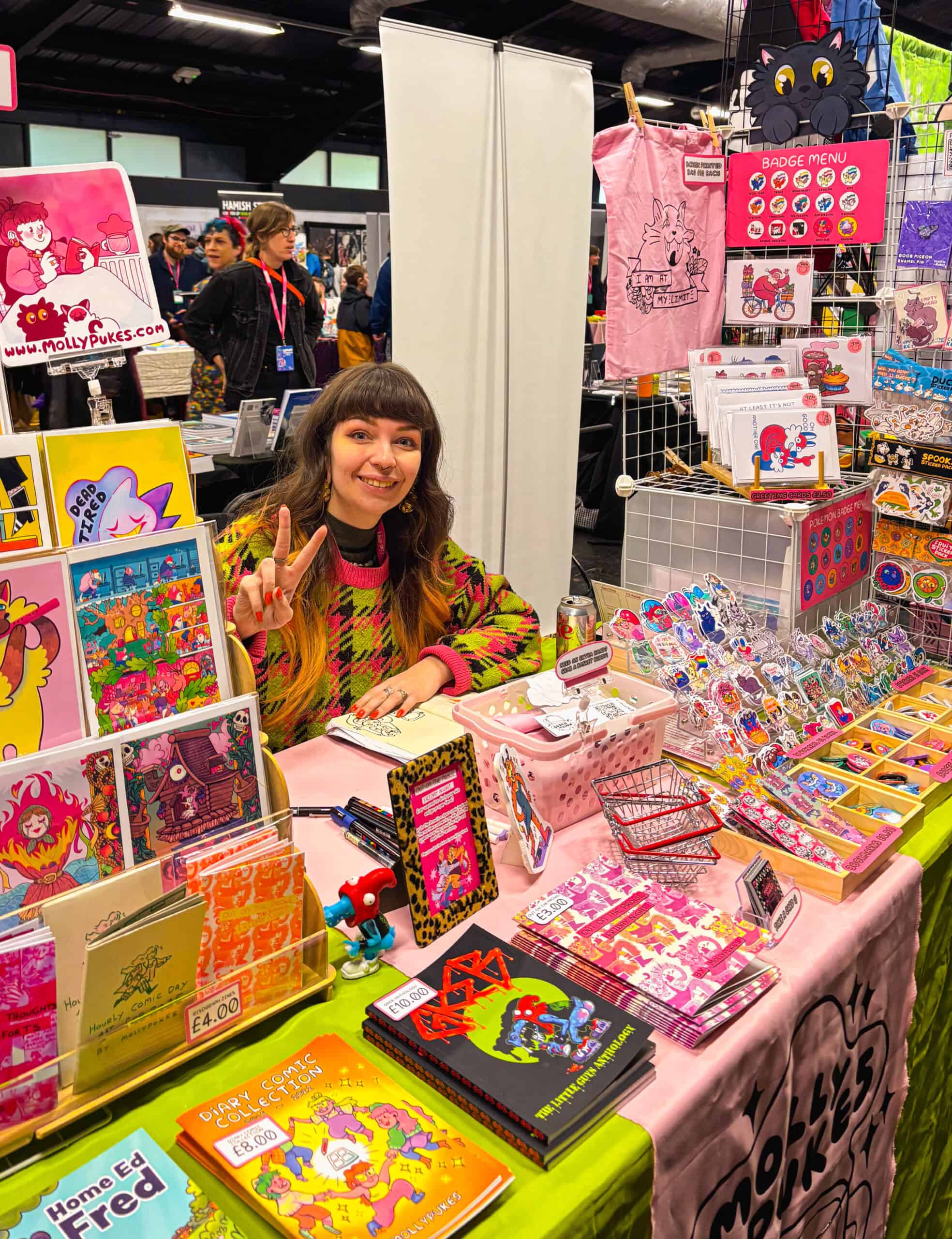
Molly in action
Queerness, Feminism, and Refusing to be neat
Molly is open about being a intersectional feminist and a queer artist, not in a vague “representation matters” way, but in the sense that their work is shaped by desire, rage, and the mess of being a queer femme navigating northern life and art spaces. “I’m quite open about being an intersectional feminist and a queerist in my work, um, because I am those things…”
They talk about being pushed into narrow boxes of what a “woman artist” is allowed to make. At art school and beyond, the references they were handed were often limited: Tracey Emin, Yayoi Kusama — brilliant, yes, but presented as if they were the only acceptable templates for women whose mental health or trauma showed up in their art.
When they took that forward into their MA at Leeds Arts University, things got even more pointed. They describe senior staff not really understanding their feminist, queer work — especially when it wasn’t heteronormative or tidy enough, when it didn’t present womanhood as something smooth and inspirational. “When I was talking to senior members of staff about my work that was feminist, because it wasn’t heteronormative-wash feminism… they didn’t understand the work and they didn’t want it featured.”
They were happy to back “women’s rights” in an abstract, palatable way, but not the messy, joking-about-abortion, explicitly queer, angry kind of feminism Molly embodies. “You can proudly say that a woman should choose, but don’t you dare joke about you having an abortion. Like it’s just, it’s really weird.”
Rather than dulling the edges, they’ve doubled down, which is why projects like Out on the Prowlare staying independent. They don’t want to trade the bite and the lesbianism and the bad choices and the wildness for something market-friendly and safe.
Their queerness shows up formally too: in who gets to be centred, in how desire is drawn, in how female and non-binary characters occupy space, take up panels, and refuse to behave. Their comics let queer women be hilarious, confused, wrong and right in the same breath, not just inspirational symbols.
Neurodivergence as Engine
A huge part of Molly’s creative engine is theirneurodivergence. They’re autistic, have ADHD, and dyslexia was their first formal diagnosis. For a long time, that wasn’t explained to them as neurodivergence at all — just a “difficulty” to work around.
Now, they talk about it bluntly: their brain works differently, and that difference is not just a challenge, it’s a superpower in the way they make art.
They describe being able to embody characters so fully while animating them that it’s like possession. “If I’m animating more than one character, it’s complete silence… I have to visualize what that feels like… there’s too much going on in my brain… it’s this kind of like embodiment… I just feel the characters I work with. I just feel them in my chest so hard to the point where anyone interacting with me… I just can’t be anything but that.”
They talk about realising that while they aren’t “medicated” in the traditional sense, drawing is essentially their prescription. “I realized that even though I’m not medicated in a traditional sense, I am medicated because I draw, and that is a form of prescription for me because it regulates how I’m feeling and it helps me understand things… when I haven’t been able to draw… I just can’t cope.” [0:15:11–0:15:57]
Without drawing, they become more erratic, more forgetful, more likely to misread social cues. With it, they can make sense of their emotions, their days, their time — they even use their sketchbook as a kind of external clock.
They’re also very clear that the stereotype of neurodivergent people being “less capable” is flat-out wrong. In their corner of the industry, they see the opposite. “Every freelancer I know makes websites, does graphic design. They’re on the spectrum… I don’t think I could be a freelancer if I wasn’t ADHD… you need the obsession.”
The long, obsessive labour of making comics, spending 80 hours in a week drawing, rewatching the same films, living inside pages and panels — makes sense to them because of how their brain is wired, not in spite of it.
At the same time, they’re frank about how badly systems fail neurodivergent kids. They’ve met parents at workshops who have children with dyslexia, and they don’t even realise that counts as neurodivergence, because no one told them. “Even in a medical setting, like when we are diagnosing kids to try and support them, we’re not giving them the full information.”
That lack of honest language and visible elders means neurodivergent young people struggle to picture their future. Who do you look to as a role model if you’re a queer, autistic, non-male artist in the north? “There’s no elder to be like, ‘You’re alright and you’re doing this, I was like you.’ So when you’re a northern artist, especially when you’re not a white bloke, it’s like, oh, who do I have as a role model?”
Whether they’re comfortable with the word or not, Molly is very clearly becoming that role model for others.
Zines, Ducks, and Tiny Things That Matter
Some of Molly’s most powerful stories aren’t from big-name clients at all, but from tiny DIY zines made in workshops with people who’d never call themselves “artists.”
They’ve run loads of zine workshops, where people sit in a room together cutting, sticking, drawing and making these small, scrappy booklets about whatever they want. “They kind of act like a moment of either complete strain or a set group to sit down with each other and feel quite grounded and just do a little comic or zine about whatever they want.”
One woman turned up and spent the whole session cutting out pictures of ducks from magazines. That was it. Just ducks. “They just made her smile, and she had this little zine in her handbag that just was full of pictures, like badly cut out pictures of ducks.”
Years later, Molly bumped into her again. The woman still carried the duck zine. “She said that when she’s sad or when she’s stressed, she just reads the little thing, and it was a reminder to herself that she does have time to do things because she had time to do that.”
That’s the kind of creativity Molly really loves: not the highbrow, not the polished, but the little, deeply personal objects that help someone feel like they exist, like they have time, like they can still make something that belongs to them.
It ties directly into their academic work too. In their MA dissertation, they dug into the “illusion of intimacy” in women’s comics — how so many of the books we see as raw and personal have actually gone through layers of editors, publishers, and market constraints. “The majority of work I could find was published and had an editor and a publisher and writing constraints and, you know, profit figures they had to meet. So arguably wasn’t authentic because it’s jumping through hoops in order to be in my hands in this glossy book.”
Zines are the opposite of that. They can be gnarly, unfiltered, vulnerable, strange — and that’s what they find beautiful. “I have picked up some zines in the past, and they are incredibly vulnerable or really gnarly. Like someone’s just been really unfiltered, and that’s really beautiful.”
At the same time, they’re painfully aware of the flip side: once something personal goes online, you can’t pull it back. They’ve met artists who regret putting certain experiences (like miscarriages) into long-form comics that then live forever on the internet. “They’ve done a comic about something they’ve been through, and they really regret it… not because they’re losing on opportunities, but because everyone knows they had that.”
Platforms want spectacle. They reward oversharing. Molly refuses to feed that machine with the most painful parts of themself. “It’s been really kind of inspiring to see someone just so brave. But it’s really difficult with the context of social media because the platform demands a spectacle.”
Now, they’re more tuned in to their own internal “nope” signals, the quiet feeling that says this stays with me. “The older I’m getting, the more I’m realizing… these indicators I have that like, oh that’s actually something that I don’t want to share, but I’m comfortable sharing this.”
Drawing as Medicine, Life as a Long Project
It’s easy to turn all this into a romantic story about the tortured artist whohas to create. Molly undercuts that a bit. They don’t draw because it makes a good myth. They draw because otherwise their brain just doesn’t work properly. “I’ve always been someone who needs to draw, not because I’m romantic about myself or I’m… particularly poetic about life, but I just find things slip out of my brain and memory a lot quicker if I don’t write it down, and I don’t really like writing, so I draw it down.”
For them, drawing isn’t just expression; it’s how they remember things, how they process them, how they stay anchored. “For me, it makes a lot more sense if I can draw it than if I’m thinking it.” [0:11:19–0:11:23]
On paper, they’re a freelance artist. In reality, they’ve built a whole ecosystem: paid illustration and animation for organisations like DC and Channel 4, workshops and live events (including work with Thought Bubble’s Comics Out Loud series), and their own long-term, personal comics that they’re pushing into the world via self-publishing and Kickstarter. “I’ll have some commissions on, I have a contract or two on, and I have my own stuff on, and they’ll be equal in actually supporting my lifestyle and supporting my family, which is really cool.”
That balance lets them centre what really drives them: stories about messy queer women, internalised misogyny, neurodivergent experience, and northern life, all filtered through a vivid, confrontational, often darkly funny visual voice.
They’ve built this whole thing without moving south, without sanding down their queerness or their politics, and without pretending that art is separate from the messy realities of trauma, disability, gender, and class.
It’s not neat. It’s not glam. But it’s real. And for anyone sitting in a northern bedroom, sketchbook in hand, wondering if they’re allowed to dream this big without a London postcode,Molly Pukesis living proof that you absolutely can.
For more visit: https://www.instagram.com/mollypukes/
Find out more info for the Out on the Prowl Kickstarter by clicking the image below: