

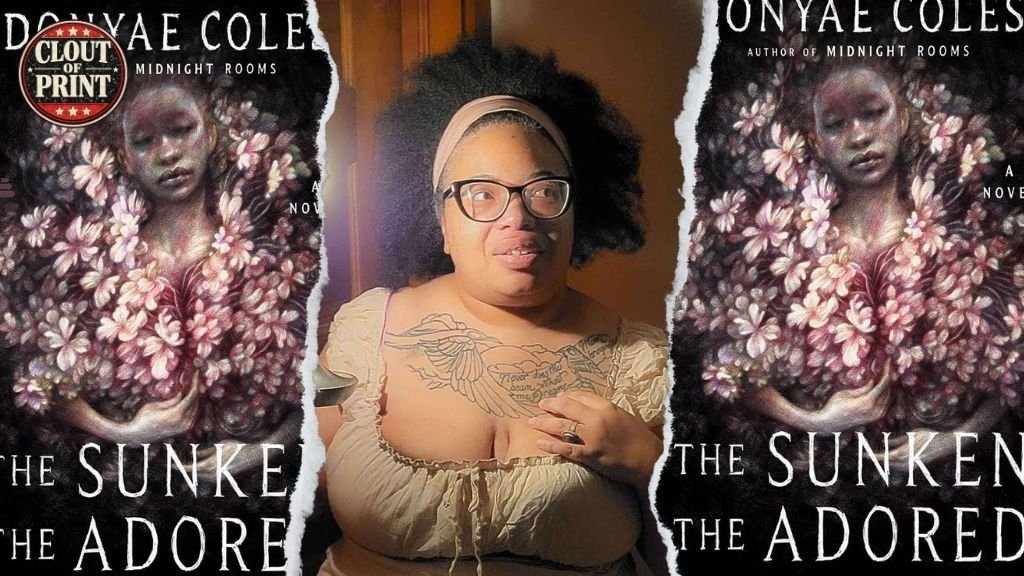
Few settings lend themselves more naturally to Gothic horror than Venice, and in Donyae Coles‘ The Sunken,The Adored, the city becomes the setting for a harrowing tale in which the sea that freed the once-enslaved Mercy may have brought something sinister along with her.
Following her acclaimed novel Midnight Rooms, Coles ventures into 19th-century Venice for a dark, atmospheric and distinctly Lovecraftian story which revolves around Mercy, a recently freed woman attempting to build a new life outside America.
Arriving in Italy as the sole survivor of a mysterious shipwreck, Mercy has little left to her name — save for an early camera capable of producing daguerreotype plates and a letter addressed to the man who enslaved her. The letter leads Mercy to Umberto, an anatomist who reveals that her former master had been employed to photograph dissected corpses. With him now dead, Mercy takes his place, stepping behind the camera and into a dark new life where death becomes both subject and livelihood.
Before long, Mercy is welcomed into the decadent world of a British Contessa, where the promise of freedom, friendship and a new identity seems almost too good to be true. And, as it turns out, it is. Beneath the opulence, a mysterious malevolence stalks the city’s canals, carrying with it the very death Mercy thought she had escaped.
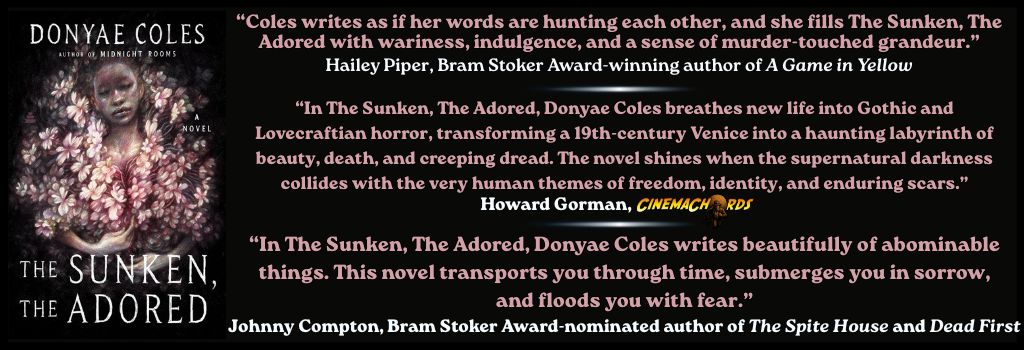
A chilling Lovecraftian tale that blends historical horror with themes of freedom, identity, and trauma, The Sunken, The Adored finds page-turning terror in the space between reinvention and the past we can never manage to outrun.
To celebrate the novel’s release, CinemaChords’ Howard Gorman sat down with Coles, who shared how she went about creating a psychologically charged Lovecraftian horror story, using 19th-century Venice as a playground for the macabre, exploring the role of photography and death within the novel, and examining themes of freedom, identity and mortality through Mercy’s journey.