

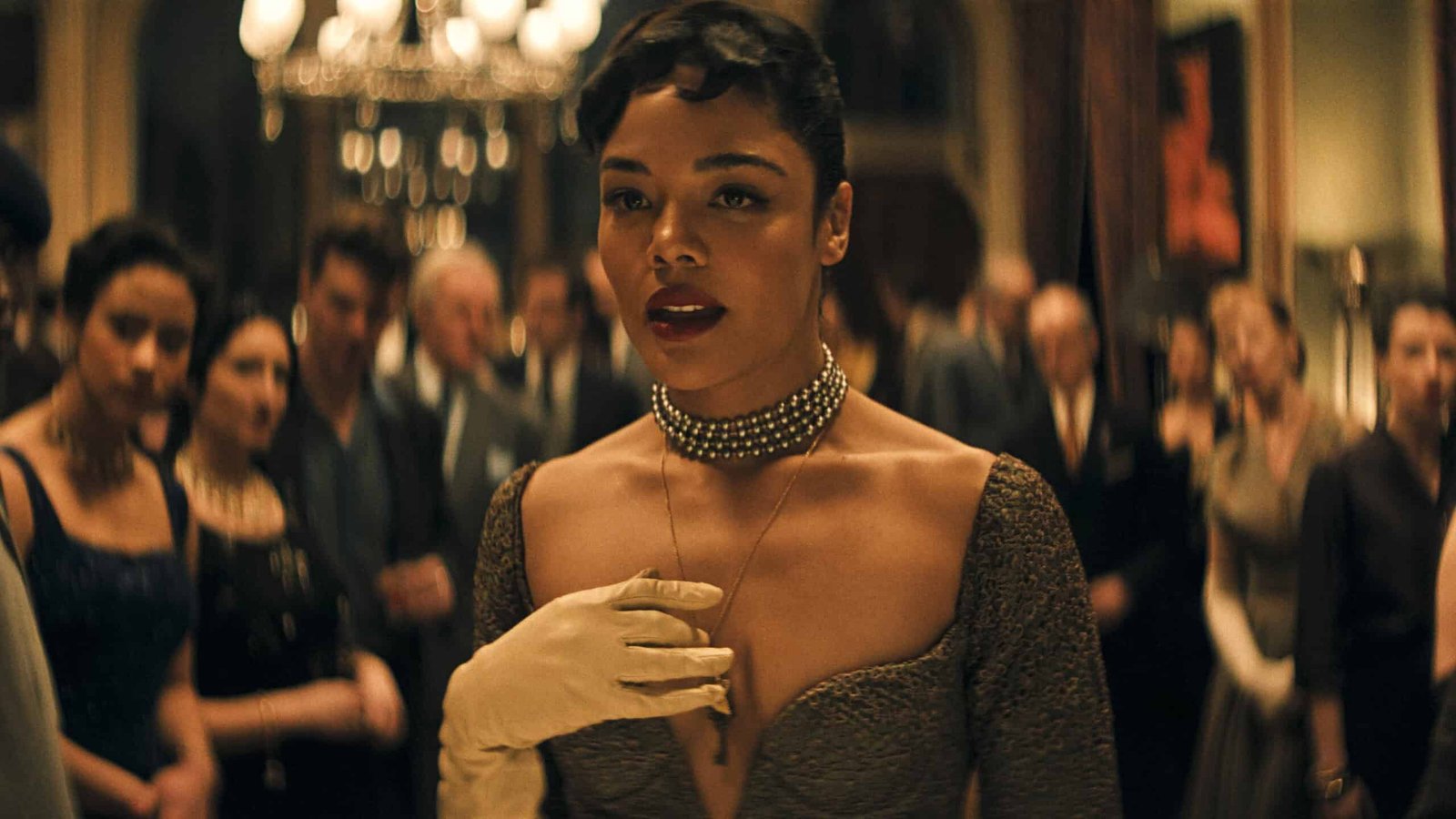
One of the most underrated films of the past year, Nia DaCosta’s Hedda embraces a forbidden romance with the flavour of betrayal and revenge to tell a story of happiness, sexual tension and class struggle. Reuniting with collaborator Tessa, they explore the undertaking of Henrik Ibsen’s classical play. Initially controversial at the time of release, it has since found new life with great appreciation shown for tackling a taboo topic, as well as embracing queer romance and the complexity of women, without playing on stereotypes at the time. Director Nia has envisioned this film for 7 or so years. After working on The Marvels and The Bone Temple, she has finally brought her dream to reality with a lush adaptation, married with nuance and strong decoration.
We discuss Nia’s journey to bringing Hedda to life and her collaboration with the cast and crew, including costume designer Lindsay Pugh, makeup and hairstylist Sharon Martin, and casting directors Jo Harris and Des Hamilton.
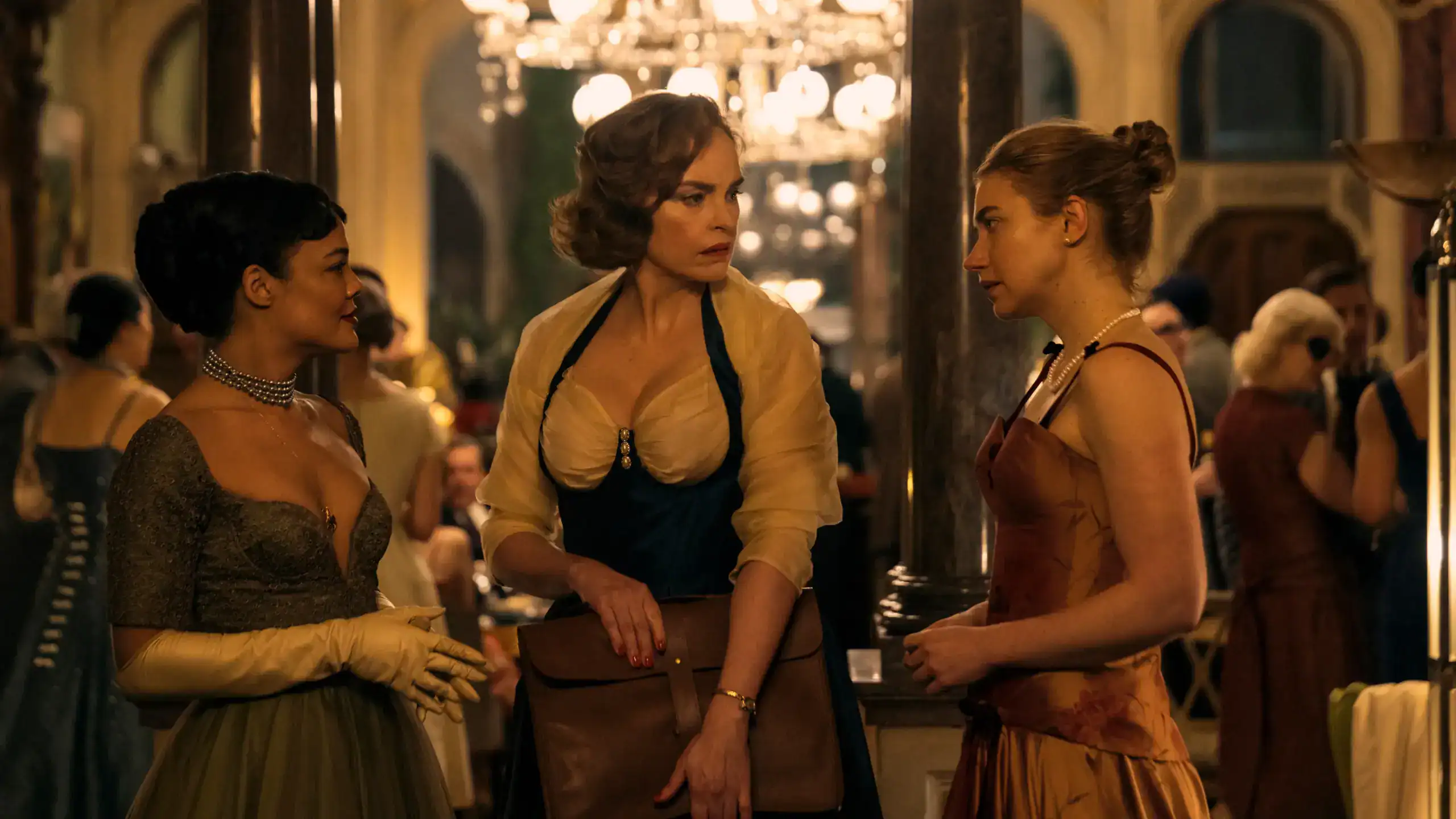
Hedda (credits: Amazon MGM)
Soundsphere] Why Hedda? She’s one of the great modern characters despite only being 30 years old.
Nia DaCosta] It’s a weird little thing that we all made and now it’s in the world and I’m really excited to talk about it. I actually wrote the script in 2018 after I made my first film. But before I made any other films, I was in the UK studying writing at Central School of Speech and Drama, and I was working with actors. We were doing theatre and I was falling in love with the process of theatre and we started studying Henrik Ibsen. We had A Doll’s House and I was like, wow, what a complicated woman this is. She’s leaving her family and her children. That’s amazing you wrote this complicated character. Then I read Hedda and I thought that he’s really invested in beyond complicated women. I really admired how confrontational she was.
I was reading about what it was like at the time, that it came out in 1991 and people were saying it was trash. They were leaving the theatre. they’re like, this isn’t real. What is this? I think what Ibsen was doing was talking about mental health, her and Lovborg, in particular, he was trying to figure out, for me at least, the people he knew who were mad and happy and who behaved in that way. When I read it, I thought, that’s such an interesting thing to talk about. But for me, we’re a little bit beyond that now, and when we talk about mental health, I was really interested in her as a woman and her self-limitation, in the context of her life and the choices she makes because he gives us a foil for her and Thea, who does something completely different with her life. She’s the meek loser from school, but she actually is probably the bravest one in the play and also in the film. So that was such an interesting dynamic and that’s why I wanted to write about it.
Soundsphere] What interested you about the time period?
Nia]So the 50s are this amazing decade of pretending. World War 2 is this huge wound, this chasm for the world. I think what people did afterwards was to say, the women go back home and then you’re traumatised, we’ll go back to work and everything will be fine and we’re gonna be fine. That didn’t really sit well with anyone, I don’t think. This is so much about projection and pretending, and these rules that don’t fit you. So I thought that decade would be really fascinating. Then England, love it as I do, is very repressed. And I thought, wow, this makes sense. Taking it out of 80 to 90 Norway, which for me, I think the 50s and England, in a cultural sense, but also not pop cultural sense are very recommendable to people. When you put something in the English country house and it’s a murder mystery, people were like, I get what it is in a way, that’s really useful shorthand, but I don’t think 1890s will really get you in the same way for most people. But as a fan of Gosford Park, it was something I thought about a lot when I was pursuing this because I thought, okay, how do I make a movie out of a play that’s in one room. I thought about Gosford Park, which I love, which is a murder mystery, but also about things, really about things. And I remember reading the script and I was like, wow, this is dense. People are the exposition in the world. You know, I was chatting away, but it works. Altman’s a genius, so that’s probably why it works. But it gave me a pathway. I was like, this will be a party. This will be set at night. And the party will bring everyone to us so that we can then create, we can create dimension, and we can create incidents, and we can have set pieces, and we can have things happening that we might put in other scenes in the world. You can have all happening here because everyone’s getting drunk, everyone’s doing coke. Everyone’s really flying off the handle, which is also what Hedda is a lot. So it ended up just working out really well.
Soundsphere] How does the gender switch fit into this timeframe?
Nia] Well, I read the play in 2022 and thought, this would be a good movie, and I didn’t write it until 2018. Pretty early on, I thought, a party, one house, they’ll be amazed. There’ll be a lake, there’ll be all these things, and Lovborg makes more sense as a woman to me. In the context of what I wanted to talk about and the themes and the play that resonated with me. I thought Lovborg as a woman makes more sense because in the play, he’s like, ‘I’m a genius and no one understands me’. He’s so depressed and he’s drinking, and obviously it was again talking about mental health. But for me, if Lovborg were a woman, then I’m thinking, this is such a parallel and a foil to what Hedda is going through. Brilliant woman who’s decided that her brilliance is going to be what transcends her sex, which is not the case and not possible for anyone to transcend. We can’t transcend our body by being smart. As a black woman in America, that was definitely what I’m taught, work twice as hard to reach half as far, which is true. But I’d say it’s much harder to get even less far. That to me was really the crux of Lovborg and what I really connected to, and what I thought would be important in the context of a story about Hedda.
Soundsphere] In terms of those 3 women, Hedda, Eileen and Thea. For the costumes, they wear stunning outfits. How did the 3 of them play together with your costuming.
Lindsay Pugh] Well, I think, after years of saying about repression, and it is about that, and all of these different women have their repressions there. They were constricted within their lives, within their dresses and within everything about them. So it was having all of those women in their different restrictions. Hedda has got this tight necklace on and her dresses are a little bit too tight. She’s in there. And then Lovborg is there and she is trying to have agency, in a man’s world. There was some sort of idea of having a very female, not that you would notice but that of an idea of a man’s suit of blue, and with a white shirt. Thea was again being restricted by Hedda. Funny there is something that really was not what this woman is. I mean, she’s a strong woman, and she gets put in a sort of infantile dress. Yeah, the fitting was excruciating but really fun.
Soundsphere] As it goes on, it becomes more and more out of control for certain people, so in terms of hair and makeup. We start from something that looks dazzling and beautiful in aesthetic. How difficult is that to transform the changes over the course of a day in story timeline?
Sharon Martin] I think the most challenging part of this project was the continuity because we kind of know where we’re heading to. And there’s only one person in this group of women who is not wearing a mask and that’s Thea. So Hedda has her mask on and Lovborg has her mask on. She turns up and she’s trying to make sure that all is well. She hasn’t been drinking for a while, her skin looks great, but it’s quite painted. And Hedda, of course, everything is controlled in terms of her hair. She straightens her hair. The makeup is perfect because everything is hidden behind all of that. In terms of managing the disintegration as the evening goes on. That was really quite challenging. Because firstly, there is the first swim where everyone’s still having a great time. So the tendrils from her, they’re playful, they’re soft and pretty. And then as the evening kind of goes on, that hair starts growing a little bit more and more, and it takes us through into the morning into the cold light of day when everything has taken place all night. Thea looks real, that’s how she arrives and that’s who she is. She’s not hiding behind anything. Both these women have now been exposed in terms of their hair, and makeup is now blotchy, and not that real skin is coming through. That was my broach.
Soundsphere] How long did you actually have to film all this?
Nia] 35 days. Everything was in Flinton, which is in the Midlands, and then we had one night at this maze. I was 20 miles up the road, or 20 minutes up the road.
Soundsphere] How did you go about casting?
Jo Hamilton] I think it was really fun building. There was such a big difference firstly between Hedda’s friends and George’s, the people. I think that was obviously a reflection of their values, what they kind of appreciated and wanted from their lives, which were totally different things. So that was interesting. And to be honest, Hedda’s friends were so much fun to ask, but the academics also, that was the joy that came out of watching those really tedious scenes. We had people improvise and they were some of the most fun improvisation sessions that we did. They did really brilliant, creative things with them. It’s quite a big cast, but everyone, even people with a few lines were there for the whole time. So I think just making sure all of them were kind of really strong, brilliant, brought something to that line or that part. And we kind of did that through having a lot of in-person sessions. Nia also enjoys that process, which is really fun for us as well. Working with everyone directly and trying to build this group of people who would then spend 7 weeks together and we’re very close after that, which was really nice.
Soundsphere] Tessa Thompson was your Hedda and you worked with her before. How was that?
Nia] Everyone was sort of saying Tessa’s going to be in it, but it was really important for me to sell the package of just me, my producer partner Gabrielle Nadig and the script. The way I went out with it was, this is the movie. I’m not interested in development. I’m not interested in like, this could be something else. This is the movie. If you want to make this great. If not, then no problem. But if you want to have a chat, let’s have a chat. So we had a couple of really great conversation with people who were interested. But plan B, who are the ones who really got it, and I felt would let me make the movie I wanted to make, gave me the budget I asked for. Then when the strikes happened, we could have easily been thrown into the dumpster, but they kept us alive. But Tessa came on pretty much right after we sold the film, after we got the green light.
Nina Hoss is someone I’ve loved since I was in my early 20s. She’s such an amazing actress. I’m from New York City and there’s this theatre, called Baza Cinemas, which showed all foreign and independent films. Barbara and Phoenix, and these German films she’s in, they are amazing. I saw them there and always loved her. But it was her agent, actually who was like, you think you know what you want, but what you want is Nina Hoss. They’re all like, oh shit, of course. We meet me and she read it, we talked and whenever Nina talks about getting the script, she’s like, okay who the hell is she playing if Tessa is Hedda and Thea is too young. She’s played Hedda for 6 years in Germany on a German stage. So it was really amazing for her to play Lovborg’s character. She always looked at on stage and been like, what’s your deal, bro? and now she’s the bro.
And then Imogen, funnily enough, we had Tessa, Nina, and Nicholas. But then we had Eve Hewson, and Callen Turner. And then the strikes happened and they had to go away. But the George role was so hard to cast. We went through 4 actors and honestly, it was sort of a blessing in disguise because we got Imogen Poots, who is stunning. And then Tom Bateman, at the end of the reception, he’s this really lovely presence and really gave that character what he made. He was a character, but I don’t think I can fully engage with. I get really strong actors in these roles that are tertiary and it’s a real privilege, frankly, to work with them in that capacity.
Des Hamilton] On a personal note, I was super excited that I found my bunch, just coming in to read and quite a lot of the overall ensemble, everybody came in person. We did improvisations around, and a nice vibration developed, you could see people that were really into it, and could really listen, and wanted to embrace the project, and immerse themselves into it. So that was a great joy. All of our casting days were good days. It was a lot of fun. We met a lot of great people. It was a really enjoyable project to work on. We’ve only seen it recently and we’re very proud to play them in the school.
Soundsphere] One of the lines that struck me at the beginning of the film was, when Hedda says, do I not look happy? So what does happiness look like to you?
Nia] This is something I thought about a lot, because I’ve made five films. I made my first one when I was 27, and then I made 2 studio films. I think when I made those 2 studio films, especially the first one I made, I was like, I’m living the dream, but I’m kind of miserable. So what is happiness actually? What is the dream? What does it mean? I had to figure that out for myself, really. Which really just meant finding balance because work is not who you are and it’s not your life. It shouldn’t be about that.
My movie shouldn’t dictate my self worth. So right now I’m very happy because I think I have a really good balance between the work, and my friends and my family, and my community and being accountable to people. I just want a house. I should work more because I should pay the mortgage. But I think that to me is happiness where I am right now, which is growing and feeling myself grow. But also having this balance between this thing I love to do, which is really fulfilling. I get to work with amazing geniuses. I just had a birthday and my friends came over and cooked for me. That balance is really important to me. So that’s happiness.