

Originally published in Uncut Take 328 (August 2024) issue…
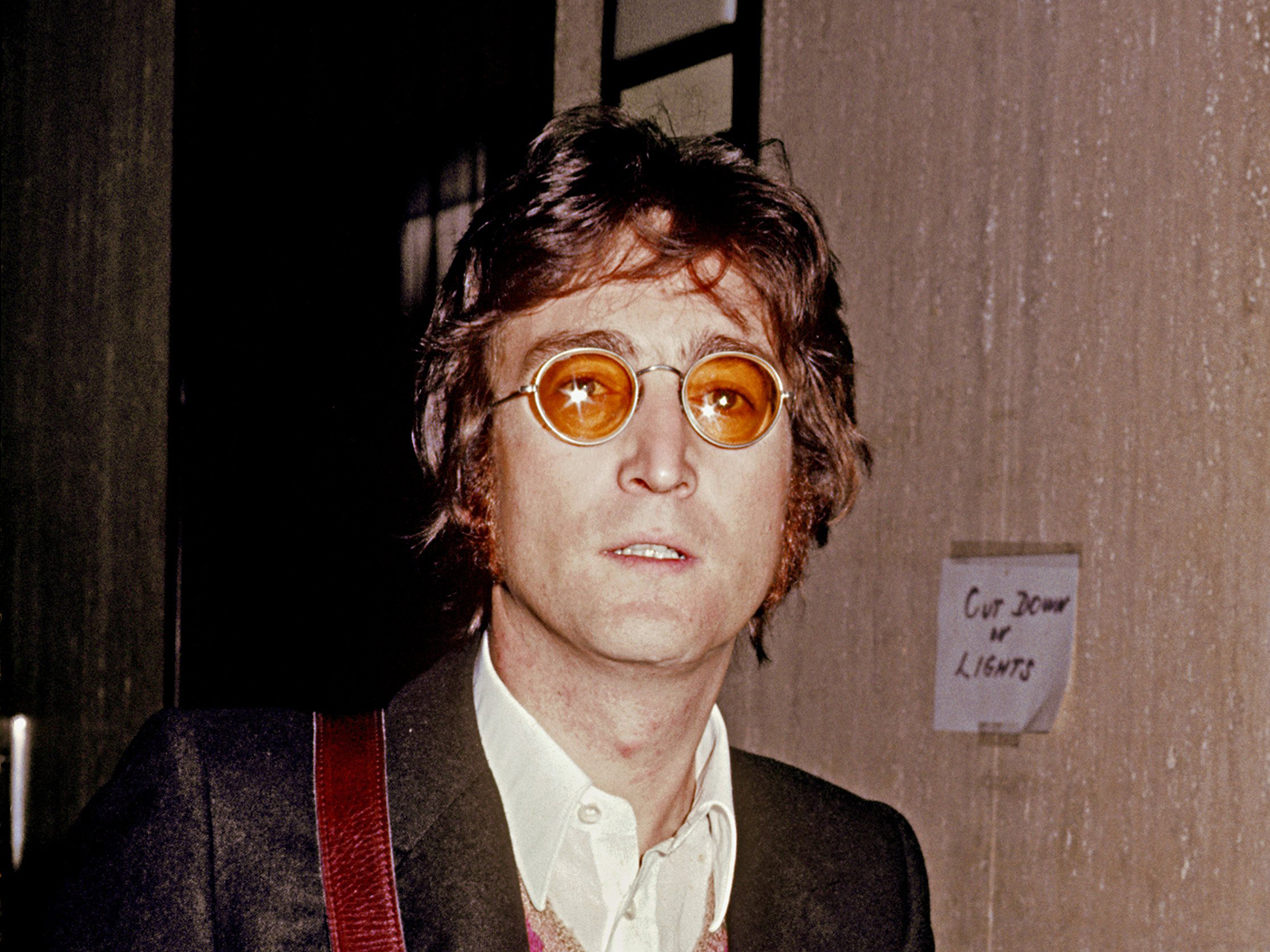
1973 marked a period of intense personal chaos for JOHN LENNON. Amid all this turbulence, however, he found creative sustenance with Mind Games – an album steeped in cosmic benevolence, emotional heft, introspection and, most importantly, love. As a new expanded edition shines a light on Lennon’s working methods, Peter Watts discovers an artist at a crossroads, looking inside himself for ways to move forward. “It’s my dad getting back on track, after a very experimental and volatile period,” says Sean Ono Lennon. “At times it went a bit out of control…”
WHEN John Lennon entered New York’s Record Plant studios in August 1973, he had to prove himself all over again. His last album, Some Time In New York City, had been critically panned for its ragged, rock ‘n’ political sloganeering. At the same time, he was under surveillance from the FBI, while US immigration authorities were trying to deport him because of his anti-war activism. At home, his relationship with Yoko Ono had hit a rocky patch. A sorely needed reset came with Mind Games – an album that he enthusiastically described as “Imagine with balls”, but whose subtle beauty soon became mired in the continued chaos surrounding Lennon.
“I grew up listening to it without realising it had to some degree been overlooked when it came out,” says Sean Ono Lennon, who has overseen an expansive reissue of Mind Games as part of ongoing re-evaluation of the Lennon solo canon.
“To me, it has always been one of his strongest records. The title track alone lives on the very top shelf of my favourite John Lennon tunes. It’s an absolute masterpiece.”
If Lennon was feeling the strain at the Record Plant, he didn’t show it. Among the musicians recruited for the sessions was Jim Keltner, whom Lennon had worked with on Imagine. Lennon had brought him up from California to play drums as part of a group of session players Lennon dubbed The Plastic U.F.Ono Band. “It sounds like there should have been some pressure, but John didn’t allow for that,” says Keltner. “He was so normal. That was what was crazy about John – he was more normal than most normal people, but with this insane genius behind it all. Knowing I was going to play with John Lennon was always such a thrill. All I had to do was play – and the fun part would be to listen back afterwards and hear John’s songs with a great band behind them. There was nothing better.”
Mind Games saw Lennon retreat from politics and return to the great theme of his post-1968 output: Yoko. The album contained several songs inspired by his love of his wife, including the beautiful trilogy of “Aisumasen (I’m Sorry)”, “You Are Here” and “Out The Blue”. Elsewhere, on “Tight A$” and “Meat City” Lennon indulged his rocky side, while “Mind Games“, “Only People” and “Bring On The Lucie (Freda Peeple)” espoused a deeper, personal philosophy. Although Lennon and Yoko were getting into magical thinking – astrology and the I-Ching Lennon retained his legendary sense of humour: “Nutopian National Anthem”, written for Yoko and Lennon’s imaginary country of Nutopia, was a couple of seconds of complete silence.
“I can sum up those sessions in a single word: fun,” says bassist Gordon Edwards. “It was so loose, you know? This was like coming home to a party. You just sat down and he’d make you feel loose, even though this was John Lennon. He picked us out of the hundreds of musicians he could have worked with and that’s something that helps you feel good about yourself. From day one, he was a professional. From day two, he walked in just like everybody else in the world two feet, two shoes and a pair of socks. He was one of us and that was a pleasure.”
But by the time Mind Games was released in November 1973, Lennon and Ono had separated. Lennon headed to Los Angeles, ostensibly to promote Mind Games, but he soon fell into the chaotic sessions for the Rock ‘n’ Roll album with Phil Spector, embarking on his boozy, 18-month Lost Weekend. Mind Games fell through the cracks. An album stuffed with gentle love songs about an estranged wife was a tough sell, commercially and emotionally.
That Mind Games had been unfairly overlooked lent renewed energy to Yoko Ono and Sean Ono Lennon as they masterminded the reissue of Lennon’s solo catalogue. New mixes – the Ultimate Mixes, Elemental Mixes, Elements Mixes, Evolution Documentary audio montages and Raw Studio Mixes – shed new light on the music, while books, maps and other paraphernalia give fans a unique insight into Lennon’s state of mind in 1973.
“Unlike his previous solo albums,” says Ono Lennon, “Mind Games strikes a beautiful balance between being raw and personal, speaking to his political philosophy, while also inserting a much needed feeling of fun and humour throughout. I think the chemistry of these elements is well balanced on this album. It’s an extremely moving, while also extremely enjoyable, musical journey.”
“I can sum up those sessions in a single word: fun” – gordon edwards
APRIL Fool’s Day, 1973, in New York City. John Lennon and Yoko Ono have called a press conference. Frustrated by the failure of their efforts to obtain American citizenship, the couple decided to create Nutopia, a “conceptual country” that took its philosophy directly from the lyrics of “Imagine” – no passports, no boundaries, no land, no laws, only people. “Citizenship of the country can be obtained by declaration of your awareness of Nutopia,” they announced, waving the Nutopian flag – a white tissue – for the cameras. When questioned, Lennon explained the concept was based on one of Yoko’s ideas. “We do it on impulse,” he told the press. “We try and use our instincts, especially for these things we call ‘mind games’. We put the thought out and then react to whatever the reaction is.”
This was classic Lennon – making a serious point but undercutting it with irony. Lennon had just been told he had to leave America within 60 days pending appeal – but as ambassadors of Nutopia, the couple claimed immunity from immigration rules. Beneath the comedy, Lennon and Ono were frustrated, aware that their outspoken political support of radical causes since arriving in New York had damaged their case. Nutopia was an attempt to win back some support and earn more favourable coverage.
Among those attending the Nutopia press launch was photographer Bob Gruen, one of Lennon’s closest friends at the time. He had been a regular visitor during the 1972 Some Time In New York City sessions, where Lennon had sung in support of a range of rebels and outcasts, from John Sinclair to the IRA. Lennon had been seduced into making such a provocative album by his friendship with Yippies Abbie Hoffman and Jerry Rubin – but the album was a bust and the FBI were on his case, alarmed at the radical posturing of one of the world’s most influential performers. “He got burnt doing the political stuff,” says Gruen. “He was depressed. This was not a happy time. Some Time In New York City had been criticised. We were having a lot of fun, but people didn’t like the political songs and the bar band. We called them the Tequila Sessions. They recorded all through 1972 with Some Time In New York City, the Elephant’s Memory album and Yoko’s Approximately Infinite Universe. There was a lot of recording and a lot of drinking.”
“people didn’t like the political songs and the bar band” – bob gruen
A low point had come in November 1972, on the evening of Richard Nixon’s landslide victory over George McGovern in the Presidential election. Lennon and Ono were at a party at Jerry Rubin’s apartment when Lennon, bombed on drink and pills, depressed by Nixon’s win, had disappeared into a bedroom with a woman. It was humiliating for Yoko and a sign of Lennon’s deepening depression.
Nutopia was an attempt to draw a line under their political activities. Another positive came in the form of their new home in the Dakota apartment complex, where they moved early in 1973, taking apartment No 72 on the seventh floor, recently vacated by actor Robert Ryan. The couple promptly set about redecorating; plaques reading “Nutopian Embassy” were installed on several doors. The Declaration of Nutopia was originally printed on the inner sleeve of Mind Games in November 1973 and a replica appears in the Super Deluxe box along with a brass plaque and white Nutopian flag.
Following Some Time In New York City, Lennon returned to the studio in March 1973, when he and Ringo Starr went to Sunset Sound in Los Angeles to record “I’m The Greatest” for the Ringo album. Lennon originally wrote the song in December 1970, looking back at The Beatles with a mixture of nostalgia and bitterness: A Hard Day’s Night was on the TV but McCartney had just told his old bandmates he was taking them to court. Now rewritten, “I’m The Greatest” became more celebratory. As Lennon and Starr tracked the song with Klaus Voormann, George Harrison called the studio. He was in town and wanted to join the fun, prompting a reunion between Lennon, Harrison and Starr – the first time that three former Beatles had recorded together since the band’s break-up. Two versions of “I’m The Greatest” appear on the Mind Games box.
Meanwhile, Lennon began attending sessions for Yoko’s Feeling The Space album in June 1973, playing guitar on a couple of tracks. He was impressed by the band she had recruited from New York’s premier session players: pianist Ken Ascher, guitarist David Spinozza and bass player Gordon Edwards. New Yorker Rick Marotta shared drumming duties with Jim Keltner, while embellishment came from Sneaky Pete Kleinow on pedal steel, Michael Brecker on sax and backing vocalists Something Different – Angel Coakley, Kathy Mull and future disco stars Christine Wiltshire and Jocelyn Brown.
“I have no idea how Yoko found me, but she called my house and left a message,” recalls Spinozza, who had recorded with Roberta Flack, Donny Hathaway, BB King and Dr John. “She said, ‘Hi, this is Yoko Ono – Y O K O’ and she spelled her name like I wouldn’t know who she was. She said she wanted me on a project. We recorded, then we played live and it was fun. I had played on so many sessions with Gordon and Ken, lots of work at Atlantic, jingles, commercials, all sorts of stuff. We were doing 10-15 sessions a week.”
“In two weeks he wrote all the songs that went on Mind Games” – may pang
Inspired, Lennon decided this was a band he could do business with. He was ready to return to the studio and work on what became his fourth solo album.
“I was working on Yoko’s album when John came into my office and said he wanted to record,” says May Pang, then Yoko’s secretary. “I just looked at him. It had been over a year since he had recorded anything and Some Time In New York City had not been received very well. I said, ‘Are you sure? When do you want to get it done?’ He said he wanted to record in two weeks. He said, ‘Get me in as soon as possible or I’ll never do it.’ In two weeks he wrote all the songs that went on Mind Games and went into the studio to record.”
BACK at the Dakota, Lennon started to write. Although Pang says Lennon wrote the album in a couple of weeks, several of the songs had been around for a while in fragmentary form. “Mind Games” itself started life as a demo called “Make Love, Not War”, written on his wonky out-of-tune bedroom piano at Tittenhurst Park in 1970. At the Dakota, he combined it with the refrain from another incomplete track, “I Promise”. The title came from a book published in June 1972, written by Robert Masters and Jean Houston, called Mind Games: The Guide To Inner Space.
Elsewhere, “You Are Here” was the title of an artwork Lennon created in 1968 for Robert Fraser’s gallery – a simple circular white canvas with the phrase “you are here” written in pen (a certified replica is included in the Super Deluxe box). Lennon and Harry Nilsson had both pledged to write a song with the title back in 1968, while Lennon wore the phrase on a T-shirt in 1972.
On Mind Games, “You Are Here” became a tribute to his love for Yoko: a song about two meeting and becoming one. It became a recurring theme of the album, explored on both “One Day At A Time” and “Out The Blue”, while “Aisumasen (I’m Sorry)” was a sincere apology to Yoko for his election night behaviour.
Lennon wasn’t solely inspired by his love for Yoko. Other songs alluded to his recent political dabbling – the refrain of “do it, do it, do it” that runs through “Bring On The Lucie (Freda Peeple)” was a nod to Jerry Rubin’s 1970s memoir, while “Only People” was an appeal to unity without conformity, its title taken from the Nutopian declaration.
Despite these two songs, Lennon had largely turned away from political sloganeering and activism. Instead, he was exploring more esoteric matters. He began an I-Ching diary and had his palms read, as if he was seeking clues and insights from a variety of sources as he tried to rebuild his relationship with Yoko.
“Yoko didn’t want to live with a drunken asshole,” says Gruen, an occasional visitor to the Mind Games sessions. “When you are drunk every day, you think that’s the solution, you think you are having fun, but it’s a drag if you are not involved.”
The songs Lennon took into the Record Plant were a return to the more personal themes of Plastic Ono Band and Imagine. The album might only have been written in a couple of weeks, but the experienced studio musicians were immediately impressed. “When John introduced the songs, it was amazing to hear the lyrics, the notes, the harmonies and the input of all the musicians and realize you have something very special,” says pianist Ken Ascher, whose credits include Paul Simon, James Taylor, Bette Midler, A Star Is Born, Bat Out Of Hell and “Rainbow Connection” from The Muppet Movie. “It was inspiring. We were session players and were used to going from studio to studio, but when you were with a great artist you could tell – it was an energy, a presence of creativity. That’s why certain artists are who they are. It’s innate. This is their talent.”
Daniel Barbiero was not your typical studio engineer. Before coming to music, Barbiero had been at Yale before spending three-and-a half years in Vietnam as a US marine. His brother Michael was in the recording business, so when Barbiero was looking for something to do after leaving the military, music seemed as good a bet as any. He landed a job at Media Sound in New York, located in a converted church. One of his first jobs was working with Stevie Wonder on Innervisions.
“After Innervisions, John called the studio and asked if I could be his engineer for Mind Games,” says Barbiero. “I think he might have spoken to Stevie to congratulate him and Stevie told him I had done a lot of vocal work with him. The first time I met John, he said, ‘Dan, I’m no Stevie Wonder. I’m just a pretty good rhythm guitarist.’ That was his opening line. To have that humility, to acknowledge the great talent of Stevie, I thought that was amazing.”
Barbiero began working alongside experienced engineer Roy Cicola with Lennon as producer, working without Phil Spector for the first time. Additional support came from a young tape op, Jimmy Iovine, who Lennon christened “Jimmy Shoes” because of his habit of wearing bright white shoes in the studio. Lennon was intrigued that Barbiero had served in a war that he had spent so much energy demonstrating against. Barbiero reconnected Lennon with his old Yale roommate John Kerry – then a member of Vietnam Veterans Against The War and later a US Presidential candidate who Lennon had briefly met at a rally in New York in spring of 1972.
Although Barbiero had worked with Stevie Wonder, he was still nervous at spending time in the studio with a Beatle, which Lennon appeared to tacitly acknowledge.
“On the first session, we didn’t turn on any equipment,” says Barbiero. “Ron left us alone and we smoked grass, talked all night and got to know each other. He knew I was intimidated, so the next day he brought with him a marker pen and walked round the studio writing on everything – ‘wall’, ‘tape machine’, ‘window’. I asked what he was doing and he said he wanted to let me know what everything was. It was very cool and a typical John Lennon thing to do because he was trying to help me to relax by using humour. I feel so grateful for our first session, when we just hung out smoking grass. That was a gift, he gave me part of his life. It was a great experience above and beyond the music.”
Another time, Lennon confided to Barbiero that one of the craziest aspects of being a celebrity was you could get anything you asked for. “He said, ‘One day I asked for a seven-feet-long guitar, just to hear what it sounded like. So they built one using piano strings. It was useless.’ Somebody showed it to me – the most ridiculous thing you could ever imagine.”
Although more experienced than Barbiero, the rest of the band were still a little intimidated to be sharing a studio with one of the most famous men in the world. All of them could recall their first encounters with The Beatles, whether it was on The Ed Sullivan Show, on the radio or on billboards – although Barbiero was the only one who could tell an astonished Lennon he had once played “Yes It Is” on harmonica in a foxhole in Vietnam.
“I first heard of The Beatles when I was in New York and everywhere you went there were posters saying ‘The Beatles are coming’,” says bassist Gordon Edwards. “It was all over the side of the cabs. I was thinking, ‘Who the hell is The Beatles?’ I began to look over my shoulder to see if they was coming for me. But then I saw them on Ed Sullivan, like everybody else in America.”
At the Record Plant, Lennon introduced each song to the band, playing it either on guitar or piano and singing a guide vocal. The group then picked up on what was needed, working out arrangements while taking their lead from Lennon. While Ascher and Spinozza, on piano and guitar respectively, wrote out chord charts, the rhythm section of Keltner and Edwards were led more by instinct. Keltner followed Lennon’s vocals – something he had always been told was a no-no for drummers as the vocals are the first thing to be replaced. Keltner was reassured when he spoke to Ringo at the Concert For Bangladesh and learnt Starr had done the same thing throughout his time as a Beatle.
“his songs were so immediately accessible…a joy to play” – jim keltner
“I usually took notes and made charts the first time I heard a song, but with John I didn’t need to,” says Keltner. “That’s because his songs were so immediately accessible, it was like they played themselves. Some songs, some artists, it’s like that. It was totally natural and that was the way he wrote them, so beautiful and poignant, compelling in every possible way and a joy to play. That was the feeling of everybody in that room.”
As if still attuned to the same beat, Keltner’s rhythm section partner Edwards says something similar. “He wrote songs that nobody else would think about writing, but when you finished the tune you felt you already knew it,” he says. “As a musician, I saw myself as like a footballer. My job on bass is to open a hole like a lineman. I bust open a hole for the melody to run through.”
Lennon worked fast, guiding sessions with a combination of firmness and humour – some of this studio chat can be heard during the Evolution mixes of the album. Spinozza had recorded with Paul McCartney on Ram, so was intrigued to see how the two former Beatles differed in their approaches. “Paul took a little more time working on specific elements like getting the drum sound right,” he says. “But John wanted to just get going. That was something I really enjoyed about the sessions. What I loved about the way he worked was that he was very fast. He’d come in and play the song a couple of times, and we’d play along to get the muscle memory or write chord changes. Then we’d record.”
“John was very well organised,” says Ascher. “He’d tell us what he wanted and then leave us to interpret what he said. It’s intuitive, based on experience and education and being in the moment. I always felt John – and maybe McCartney too – when they wrote, they heard a record, they didn’t just hear a song. They seemed to have an instinct for how the record was going to sound. It made me feel more secure because this wasn’t vague, this gave it direction. We were pretty locked in. One of the things I really remember about the album is that we sounded like a real band. What a pleasure to play with all those guys. Something about that organisation and spontaneity made Mind Games a special album.”
As the band worked on the songs that Lennon brought into the studio, they added their own twist. One highlight was David Spinozza’s one-take guitar solo for “Aisumasen (I’m Sorry)” “When I had finished, John hit the talkback and said, ‘That’s the best damn solo you have played on anything anywhere!’ That felt pretty magical!” On “Meat City”, Keltner was asked to play with drummer Rick Marotta, another native New Yorker familiar to the rest of the band from the session scene – the Evolution Mix has Lennon, with joke exasperation, asking the two drummers to work out how they would play it together. After initial tracking was complete, other musicians came in for overdubs, including Michael Brecker on saxophone, Flying Burrito Brother Sneaky Pete Kleinow on pedal steel and backing vocalists Something Different.
Lennon’s own vocals required special attention. This was Barbiero’s main role. He learnt quite quickly that Lennon was insecure about his vocals, particularly on softer ballad-style numbers of which there were several on Mind Games. “He was a very good rock singer, but I think he felt that his voice did not have enough character,” says Barbiero. “We would do a lot of work on his vocals. We’d double it, we’d use echo and delay and feed it back in. If you listen to any of his records there is a lot of engineering on his voice, which gives it a bit more colour.”
The band members are surprised to hear that Lennon was uncomfortable with the sound of his voice. “How can you be unsure about something that has sold a million records?” asks Edwards rhetorically, while Keltner wonders whether Lennon’s insecurity might have had something to do with having spent much of his career working alongside a man who boasted perfect pitch. “I feel John was smart enough to know the beauty and brilliance of his own voice, so I don’t know if I buy into that idea,” Keltner eventually decides. “We had many conversations and I think he just liked the effects, but I listened to the songs and it takes me right back to that time. I listened to the version of ‘Aisumasen’ that Sean did, and they pumped up the vocal and took away the effects and it was done so well. It blew my mind. It’s so beautiful. I told Sean it sounds like a soul record.”
“There was all this drama with Spector and Yoko” – tony king
AS Barbiero, Lennon and Cicala worked on the mix, one figure was noticeable by their absence. Yoko had been a regular presence during the recording, often sitting in the control room while Lennon recorded with the band. She was often accompanied by loyal secretary, May Pang. But as the sessions continued, both seemed to vanish. One evening towards the end of mixing, Bob Gruen visited the studio to see Lennon.
“I’d usually drop by at night, chat for a while and then drive John home to the Dakota,” says Gruen. “Then one day he asked me to drive him to 81st Street, which was May’s apartment. I said, ‘Really?’ I didn’t ask too many details, but I was completely stunned at what was going on.”
With the approval of Yoko, Lennon and Pang began an affair that lasted around 18 months. That may have been one of the reasons the original final mix of Mind Games was a little wanting. Not only was Lennon distracted, but he also relied upon Yoko’s advice and support when it came to music.
“Yoko was a formidable presence in the studio,” says Keltner. “We all took her very seriously. She would sit in the control room, she would make comments, which is a real no-no in most worlds – you wouldn’t have your spouse sat in your place of work telling you what they think. But she did and we listened. I considered her a part of the production and if she said a song was too fast, even if John disagreed, it caused me to think about my playing and maybe make an adjustment. I always listened to what she was saying.”
In September 1973, almost as soon as the album was completed, Lennon took himself away to Los Angeles, for what was initially intended as two-week holiday. Lennon stayed at an apartment belonging to his lawyer, Harold Seider. From there, Pang called Tony King – a British publicist and plugger who knew Lennon through Andrew Loog Oldham, in town working on Ringo’s album.
“May Pang said that John would like me to help launch his album,” says King. “I had always been rather nervous of John because he could be very sharp, so I wasn’t exactly comfortable with meeting him. I didn’t know what version of John I was going to get! But he was so friendly and could not have been nicer. He treated me like an old friend, which was a bit over the top because I wasn’t.”
During their initial conversation, King began to realise Lennon and Pang’s relationship was not quite as simple as secretary and boss. King took Lennon out to dinner to continue the meeting but was so flustered by having him in his car that he couldn’t park. “I told him to get out the car, go into the restaurant and wait for me,” he says. “It’s not every day you are driving down Santa Monica Boulevard with John Lennon sitting in the passenger seat. He found that hilarious.”
It says much about the Lennon-Ono relationship that King was dispatched to New York to meet Yoko, who was still in charge of business affairs. “Yoko always had that ability to keep him calm, but she had got a bit fed up,” he says. “There was a lot of drinking and infidelity and she’d had enough, so set him up with May and sent him away. But he spoke to her every day, sometimes three times a day. She wanted to meet me to see what kind of a person I was. Could I be trusted around her wayward husband? I went to New York and we got on really well, I liked her a lot. She was very sad about the break-up and I had to comfort her a bit. John told me that Yoko liked me, so I was in. It seemed that even apart, they were together. May was great but I always knew the power was with Yoko.”
Gruen never made it down to LA, which, he quips, is “why I’m still alive today”. But he also felt that the Lennon-Pang affair was a temporary thing. “He was calling Yoko every day,” he says. “But she didn’t want to be with a drunk, depressed guy.”
King told Lennon some home truths. He had lost part of his audience with Some Time In New York City. That album’s sole single, “Woman Is The N***** Of The World” was hardly radio-friendly and while “Mind Games” was much better, Lennon still had a lot of making up do to. King schmoozed Paul Drew – who ran the influential RKO radio chain – and introduced Lennon to everybody who mattered at Capitol. Lennon was sent out to do interviews with the influential trade papers, reassuring them that he was a musician and not an activist. They also made a TV commercial for Mind Games where King dressed as Queen Elizabeth II while Lennon and new friend Elton John guffawed from the sidelines. “John did anything I suggested,” says King. “It was a bit of a humbling time but that was the charm of him, he never once puffed up his feathers about anything.”
Mind Games was released in November 1973 – the same month as Paul McCartney and Wings’ Band On The Run. The hard work had paid off: Mind Games was received much better than its predecessor. But despite several strong candidates, no single followed “Mind Games” and momentum stalled. Lennon got swept into the chaos of the Rock ‘N’ Roll sessions with Phil Spector. Without Yoko, Lennon began to drink heavily, finding willing partners for bad behaviour and tomfoolery in LA’s party scene. King secured Lennon the use of Lou Adler’s house. On one memorable occasion, he was called by Pang in the middle of the night – Lennon was smashing the place to pieces. Surrounded by smashed gold records, King had to wrestle his inebriated boss to the ground, much to Lennon’s surprise.
“I told him it was him or me,” says King. “There was all this drama with Spector and Yoko and so many things going on. These periodic lapses into bad behaviour got on my nerves, to tell the truth. One day I told him I’d had enough and quit. The next day, he sent me a Marilyn Monroe screenprint by Warhol. He signed it, “To Tony with love from one of your problems’ with a little drawing of him and a tear coming out of his eye. I still have it.”
“We got into some incredible grooves. It was intense” – ken ascher
AS Lennon continued to party in Los Angeles, Mind Games was left behind. Over time, this sensitive, gentle, often very beautiful album became absorbed into the more sensational narrative of the Lost Weekend. For the musicians who worked on Mind Games, the sessions were a special moment thanks to Lennon’s personality and musical genius, which stood out from the thousands of hours they spent in the studio. Gordon Edwards isn’t the only member of the band who wishes they could have hit the road. “It would have been a smash,” he grins. “Can you imagine how good we would have sounded playing these songs together for a period of weeks? Wow!”
“Everything about John was strong and solid,” says Keltner. “Music, conversation, everything. I never met anybody like John and I played with Bob Dylan. Bob hardly spoke, he directed in a completely different way, but John was so vocal. He talked about everything, every element, and he did it with a lot of humour.”
Mind Games offers insight into Lennon’s obsessions and preoccupations in 1973. It showcases his mischievous humour, his spiritual inquisitiveness and his deep and abiding love for Yoko – despite their difficulties. But above all, it highlights his continued musical brilliance – from his reunion with three-quarters of The Beatles to the fun-filled sessions at the Record Plant in the company of the gifted studio musicians. “Listening to John’s voice, having listened to so many Beatles records, that was very inspiring,” says Ken Ascher. “I thought all the time, ‘This is John Lennon singing.’ Every time we did a song, I thought, ‘This could be a hit record’, then we’d go straight to the next song and I’d think, ‘Oh, this one could be a hit record, too.’ Hearing John and the way he wrote was very inspiring and emotional. We got into some incredible grooves. It was intense. That album had a feel. When you took the needle off the record, you were left with a satisfying feeling. You knew you had been on a journey with John.”