

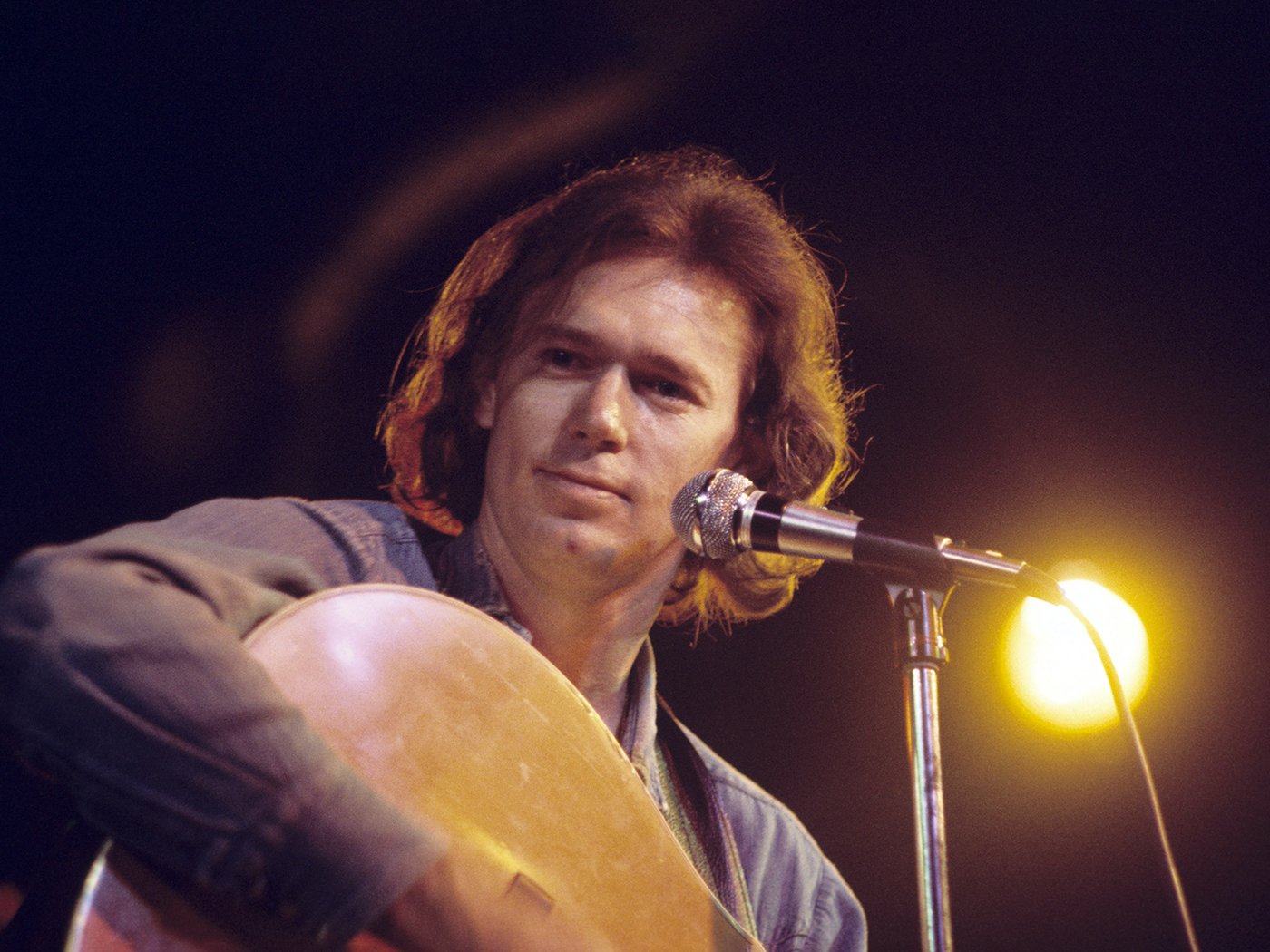
Lee Clayton died on June 12, 2023, on the day he was due to start work on his first album in 30 years, his death barely mentioned anywhere. Who was he? “There’s only one country singer who has influenced me and that’s Lee Clayton,” Bono told an interviewer in the late ’80s, so he knew; one of the few. Otherwise, Clayton’s life and career were attended by not much more than obscurity, his lonely death in a motel room in White House, a small Tennessee town 20 miles north of Nashville, the sad conclusion to a musical life that had once promised so much after Waylon Jennings turned Clayton’s song “Ladies Love Outlaws” into an Outlaw Country anthem in 1972. He was 81 when he died, a musical pioneer long forgotten for the few groundbreaking albums he made before he walked away from it all, into the shadows, the long years of silence.
He was born Billy Hugh Shotts in 1942 in Russellville, Alabama, and grew up in Oak Ridge, Tennessee. He was a talented guitarist and pedal steel player, good enough at the age of nine to be showcased on a local radio programme, Saturday Night Radio Show, playing Leon McAuliffe’s “Steel Guitar Rag”. He married young, before he graduated from college, a mistake. He was consumed by a restlessness that took him out of his marriage and into the US Air Force. By 1967, he was flying F-101 Voodoo jet fighters over California, almost crashing when one of them went into a tailspin at 1,500 feet, Clayton pulling out of a near-fatal dive at the last moment. He wrote about it later, on a song called “Old Number Nine”.
Discharged from the Air Force, he moved to Nashville to make it as a country singer and songwriter, living in a shed in the woods with his guitar and a dog named Elvis Firewolf. He caught a massive break when his song “Ladies Love Outlaws” reached Waylon Jennings, whose version became a million-selling hit. A recording contract with MCA quickly followed, and an eponymously titled debut album, produced by veteran Nashville guitarist Chip Young, who’d played on albums by Kris Kristofferson and Dolly Parton and recently produced records for Billy Swan, Mickey Newbury and Joe Ely. Top-class session players like Reggie Young, Tim Drummond and Lloyd Green played on the album. Bonnie Bramlett and Carly Simon sang backing vocals. Clayton on the cover was pictured in a country lane, saddlebags on a fence post, dressed in denim jacket, shirt and jeans, the wind in his hair, Kris Kristofferson’s younger brother.
It had hit written all over it, but sales were dismal. Clayton later dismissed it entirely as a disappointing failure. But it was packed with great songs. “Bottles Of Booze” was a stark song about an army veteran drinking himself to death that recalled John Prine’s “Sam Stone”. “New York Suite 409” had the same ache as Paul Siebel’s “Louise” or “Bride 1945”; the bandit ballad “Henry McCarty” could have come from Siebel’s second album, Jack-Knife Gypsy. “Mama, Spend The Night With Me” leaned into Dylan’s “It Takes A Lot To Laugh, It Takes A Train To Cry”. Disconsolate when it flopped, Clayton burned through his songwriting royalties for “Ladies Love Outlaws” and his MCA album advance. He later told a friend he spent most of 1973 snorting cocaine in the back of a limousine. He moved to California, where for the next three years he lived in a motel in Joshua Springs, watching the sun rising and setting, writing the occasional song. By 1978, he was back in Nashville, newly signed to Capitol, and making an album he called Border Affair with old Nashville hand Neil Wilburn, an engineer on records by Bob Dylan, Leonard Cohen, The Byrds, Waylon and Johnny Cash, and producer of Guy Clark’s first two albums.
By now, Clayton had become friends with the Dublin-born guitarist Phillip Donnelly, The Clontarf Cowboy, who, after arriving in America as part of Donovan’s band in 1971, had settled in Los Angeles. He became a crucial collaborator on Border Affair and Clayton’s following three albums, before going on to work with John Prine, Townes Van Zandt, Nanci Griffith, Johnny Cash and Emmylou Harris. His torrid playing, a mix of rock, country and traditional Irish melodies, quickly became a signature sound of Clayton’s records, solos like sculptured lightning flashes illuminating the often bleak wastelands of Clayton’s songs. “Back Home In Tennessee” was awash with Townes Van Zandt’s fatalism. Waylon had a hit with the woozy cantina dream of “If I Could Touch Her At All”, a song also covered by Willie Nelson, George Jones and, in 2019, Bill Callahan. Wayne Jackson and Andrew Love from The Memphis Horns brought a soulful buoyancy to the noble “Silver Stallion”, later covered by country supergroup The Highwaymen, Waylon, Willie, Johnny Cash and Kris Kristofferson, and Cat Power on her 2008 Jukebox album. “Like A Diamond”, “Tequila Is Addictive” and the forlorn drift of the title track gave voice to restless urgencies, destructive obsessions, soiled romance. The album as a whole was raw, bruising and much admired by those who actually heard it.
“It is music shorn of the decorative niceties that madmen and drunks and poets never appreciate anyway, and it is music the likes of which has never before been recorded in Nashville,” Nick Tosches announced in a Rolling Stone review of the album in April 1978.
Clayton’s next album was 1979’s Naked Child, produced again by Wilburn and recorded with a studio band that now also included JJ Cale, Klaus Voormann and the English drummer Tony Newman, who’d played on Jeff Beck’s Beck-Ola, David Bowie’s Diamond Dogs and in the last line-up of T. Rex. It took him even further from anything you’d associate with Nashville and didn’t have much in common with anything else that was happening. “Saturday Night Special” was a vengeful thing, full of furious turmoil. “10,000 Years/Sexual Moon” was a song about calamity and lust, full of the kind of apocalyptic imagery that featured on Dylan’s Christian albums. “I Ride Alone” was a defiant hymn. “A Little Cocaine”, written about a friend destroying her life with drugs, was one of his greatest songs, a beautifully poised lament. The album sessions were full of conflict. Clayton became so frustrated by Wilburn’s era-specific production that he stole the album’s master tapes, resulting in a stand-off with Capitol, who negotiated their release as if they were hostages, gagged, bound and blindfolded in a cellar.
America was as indifferent to Naked Child as it had been to Border Affair, but Clayton had a growing audience in Europe, opening shows there in 1980 for Roger McGuinn and Chris Hillman, then touring as a duo. In February 1980, he played London’s Hammersmith Odeon, an unforgettable show if you were there. Around the same time, he was interviewed by Melody Maker. He spent most of the interview sprawled on a record company sofa, distant, distracted, guarded; hard to get to at first, but slowly, maybe reluctantly, becoming more expansive, or at least less inclined to spend most of his time staring at the carpet, wallpaper or ceiling.
There was one more album for Capitol, 1981’s The Dream Goes On. Wilburn was dropped as producer, Chip Young recalled. The anger that had been gathering in Clayton’s music broke over the album like a brutal thunderstorm, a fearsome downpour. He sang angrily about America’s impoverished, vulnerable lives, the deprived and exploited. “What’s A Mother Gonna Do”, “Dragging Them Chains” and “Where Is The Justice” were gales of outrage. Album highlight “Industry” imagined a coming American landscape overpopulated with missile factories, chemical plants pumping poison into rivers, entire industrial zones behind barbed-wire fences, patrolled by armed security guards, some premonition of ICE squadrons and illegal detentions.
The album had barely reached the shops when Clayton announced his retirement from the music business, just walked away. Over the next seven years, he wrote two volumes of autobiography and a play called Little Boy Blue. If he wrote a song during these years of exile, no one heard it. And it’s likely no one would have heard again of Clayton, if it hadn’t been for the intervention of a Norwegian promoter named Kai Jarre. Jarre wasn’t much of a country fan. The Velvet Underground, Bowie and Bob Dylan were more his thing. But he heard Clayton and discovered “the Lou Reed of country music”.
In May 1988, he brought Clayton to Oslo to play a solo set at a Rockefeller Music Hall memorial for Norwegian music journalist and editor Tore Olsen on a bill that also included Timbuk 3 and a host of Norwegian acts. Clayton played a 40-minute set that was received with a 15-minute standing ovation; fellow guests Steve Young and Tom Russell joined him for 20 minutes of encores. Jarre brought Clayton back to Oslo in July, putting him together with some hot local players Clayton named The Trueloves. They played two sold-out nights at Oslo’s Cruise Café. Jarre added two more shows that he recorded. A 10-date tour of Norway and Sweden was booked. Clayton played five of them, then without explanation disappeared back to America. He returned for more shows in Belgium, the Netherlands and Germany. There were more occasional dates over the next years. In 1990, the Dutch label Provogue released Another Night, a collection of tracks from the Cruise Café show that Kai Jarre recorded. There was also a 1994 album called Spirit In The Twilight, produced in Dublin by Phil Donnelly, that most fans would prefer you didn’t mention, Donnelly apparently under the odd impression that Clayton was making a move on the stadium rock market. And then there was silence.
He seemed to settle into an anonymous motel life with few friends. Once in a while, he’d turn up at a Nashville club, but he had no serious engagement with music for nearly 30 years, a fading memory even for fans. There was a digital single in 2017, a rousing thing called “Let Love Live In Me”, so he must at some point have started writing again. In late summer 2023, Dave Cobb, the Nashville producer of albums by Jason Isbell, Sturgill Simpson and Chris Stapleton, was surprised to get a call from Clayton. He wanted to know if Cobb would be interested in producing a new album for him. Cobb booked session time at Nashville’s RCA Studio A.
He was there with a small crew on the morning of June 13, waiting for Clayton to arrive and start the first day of recording. When Clayton failed to show up for the session, the morning dragging on, a worried Cobb sent one of his crew to check on Clayton at the motel in White House where he’d been living. Cobb’s assistant found him dead in his room. He’d died alone, presumably from a heart attack, although his friend, Nashville songwriter Josie Kuhn, quickly claimed he’d committed suicide. The official announcement on his website a few days later merely confirmed his death, giving no reason for it. There was no Opry farewell or memorial at the Ryman, no major obituaries, barely a mention anywhere of his passing, just a gathering of the few friends he had at Nashville’s Browns Diner for a night of memories and songs.
Back in Oslo, Kai Jarre read about Clayton’s death and was reminded that he still held the full tapes of Clayton’s 1988 show at the Cruise Café. Another Night, the 1990 Provogue album, had featured only eight of the tracks Jarre had recorded. His compilation Lost Piece Of Mind: Live In Oslo 1988 gathered the complete Cruise Café performance and added tracks recorded at the Rockefeller Music Hall, including “Knockin’ On Heaven’s Door” and “Ladies Love Outlaws” with Tom Russell and Steve Young. Elsewhere, there were raging versions of Clayton classics. “Dragging Them Chains”, “Tequila Is Addictive”, “I Ride Alone”, “Bottles Of Booze”, a stunning “A Little Cocaine”, Trueloves guitarist Tore Elgarøy bringing as much to them as Phil Donnelly, “Saturday Night Special” roaring like the Dylan of “Where Are You Tonight? (Journey Thru Dark Heat)”, a dispatch from the wild edge of everything. For fans of Clayton’s early albums who hadn’t visited them in a while, listening to the album when it came out in September 2026 was an electrifying reminder of what a talent was lost when he breathed his last in that Tennessee motel.
For more Lee Clayton listen to The Essential Lee Clayton: 1978-1981 (Repertoire), Lost Piece Of Mind: Live In Oslo 1988 (Just 1 Record).